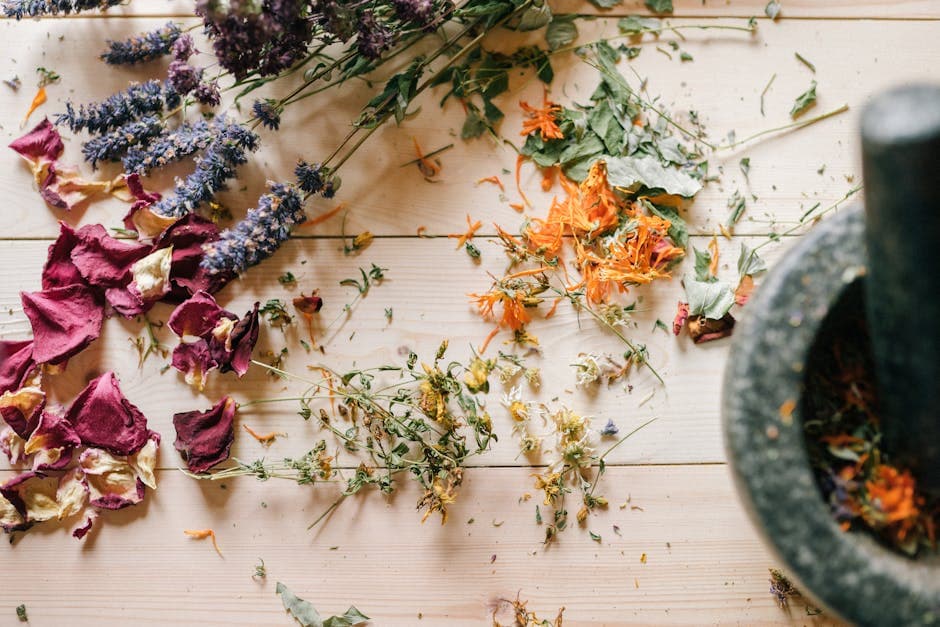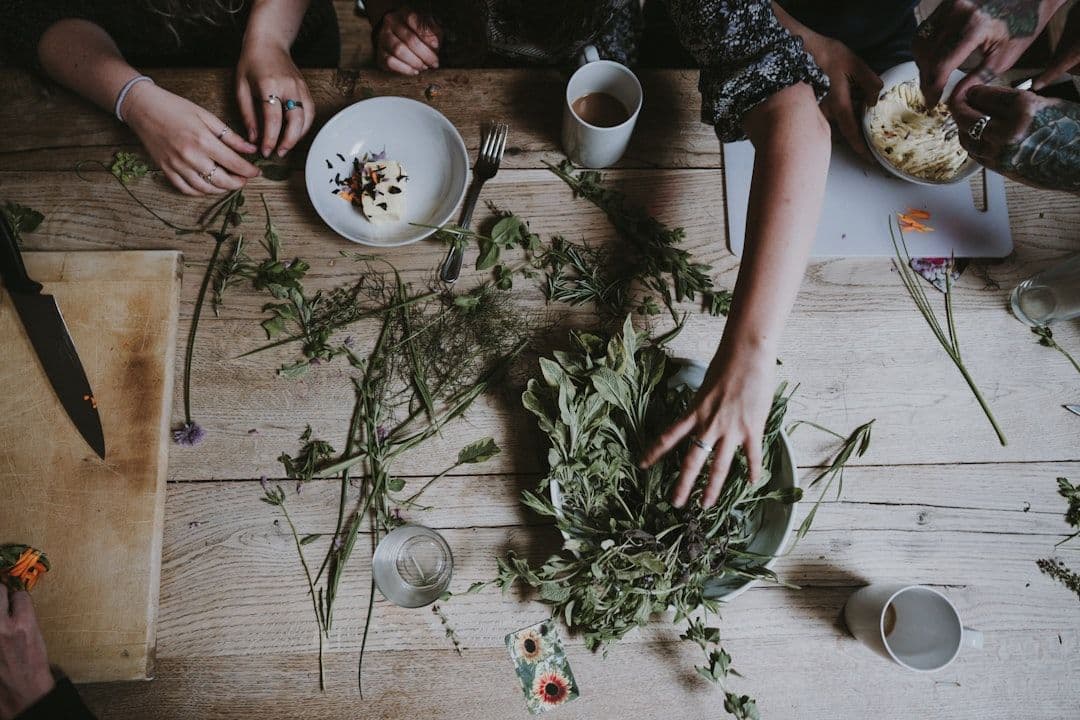
Herbal medicine is the use of plants and plant preparations, such as teas, tinctures, capsules and skin products, to support health and wellbeing. It is for seekers curious about plant-based traditions, and for anyone who already takes herbs and wants to understand them better. This guide explains what herbal medicine involves, where it comes from, what research does and does not show, and why safety deserves as much attention as the benefits.
What herbal medicine is and how it works
Herbal medicine, also called phytotherapy or botanical medicine, draws on leaves, roots, flowers, bark, seeds and other plant parts. They may be dried and steeped as a tea, simmered into a decoction, extracted in alcohol as a tincture, packed into capsules, or made into creams, oils and compresses for the skin. A practitioner may suggest a single plant or a blend, depending on the tradition they work in and what you want help with.
Plants contain many chemical compounds, and the idea behind herbal medicine is that some of them act on the body. Some are well characterized, and others are not. A whole-plant preparation is a mixture, and what is in it can differ with the species, where and how it was grown, which part was used and how it was prepared. Many herbalists argue that a whole plant behaves differently from one isolated compound. That is an appealing idea but a hard one to test, and it remains debated.
It helps to be clear about what natural means here. Plant compounds are real chemistry, which is why they can have effects and also why they can cause side effects or change how medicines work. A consultation with a trained herbalist is also different from picking a product off a shelf, because a practitioner considers your health history, your medications and your goals before suggesting anything.
Where herbal medicine comes from
People have used plants for healing for as long as there are records. Written descriptions of plant remedies appear in ancient Egyptian medical papyri and in early Chinese and Indian medical texts, and many cultures built their own plant traditions, passed on by healers and families. Much of this is traditional knowledge, valuable as culture and as a source of leads, but not the same as clinical evidence.
Several systems are still practiced today, including Ayurveda from India, traditional Chinese medicine, Western herbalism rooted in European and North American traditions, and many Indigenous plant traditions. Plants have also shaped modern pharmacy, since a number of medicines were first derived from plant compounds. That history shows plants can be pharmacologically active. It does not mean that any particular herbal product works for any particular purpose.
What people use herbal medicine for
People explore herbal medicine for many reasons. Common ones include digestive comfort, winding down after a stressful day, sleep, seasonal sniffles, menstrual and menopausal changes, skin comfort and a general wish to look after their health with plants. Others come because herbs are part of their family or cultural practice, or because they want a slower, more personal kind of consultation than a short medical visit allows.
A 2023 systematic review in Nutrients covered 44 studies with 16,929 participants and found that people mostly explained their herb and supplement use by reported benefits across many conditions and by ease of use. The same review found that most people took herbs alongside prescription drugs, and that only a small share knew about possible interactions. These are reasons people explore the practice, not promises of any outcome.
You can browse the conditions and symptoms hubs to see how herbal medicine sits alongside other approaches for the same concerns.
What the research says
The research on herbal medicine is large but uneven, and what is true of one herb is not true of another. Some plants have been tested in randomized trials, many have not, and reviews often describe the methods as modest.
Two recent umbrella reviews show the pattern. An umbrella review in Phytotherapy Research of 18 systematic reviews on ginger for nausea in pregnancy rated 28% of the reviews as high quality, 28% moderate, 22% low and 22% critically low. Its authors reported that ginger reduced nausea more consistently than vomiting compared with placebo, and called for more research on doses and long-term safety. This is an example of how research is reviewed, not a recommendation, and pregnancy is a time to check with a clinician first.
An umbrella review in Frontiers in Medicine of 20 earlier reviews of combined traditional Chinese and Western medicine for fertility problems linked to polycystic ovary syndrome found that only four of 153 outcomes met its top three evidence classes. Its authors concluded that robust evidence remains limited. A review of medicinal mushrooms used alongside cancer drugs found that most of the 77 clinical studies had modest methodological quality.
In short, herbal medicine is neither proven nor disproven as a whole. Ask about the evidence for the specific herb and purpose, not the field in general.
Safety and who should check first
Natural does not mean safe. A 2020 systematic review in the British Journal of Clinical Pharmacology found 78 herbs, foods or supplements reported to interact with warfarin, a blood thinner, and urged people to seek advice before starting any new herb. A 2026 review of herb-drug interactions found that 31.9% of included studies reported clinically relevant interactions, most often lower drug levels in the blood.
Quality is a second concern. Reviews of herbal products have found cases of undeclared prescription drugs and toxic metals, particularly in products sold for weight loss or sexual performance, and some herbal supplements have been linked to liver injury, though proving cause is difficult.
Check with your doctor or pharmacist first if you take any prescription medicine, are pregnant, breastfeeding or trying to conceive, have a liver, kidney or heart condition, are preparing for surgery, or are choosing herbs for a child. Stop and seek care if you notice a rash, swelling, yellowing of the skin, severe stomach upset or any unusual symptom.
Fitting it alongside everyday and conventional care
Herbal medicine is best understood as complementary. It can sit beside your regular care, for example as a calming evening tea or a practitioner-guided plan, as long as your clinicians know about it and it does not replace treatment you need. Never stop or change a prescribed medicine because of an herb without talking to your prescriber.
In practice, bring a written list of every herb, supplement and medicine you take to appointments, including the doses and brands. Ask your pharmacist to check it for interactions. A good herbalist will welcome that coordination and will refer you back to your doctor when something calls for medical attention.
Finding a herbal medicine practitioner
Look for a practitioner with recognized training in their tradition, who asks about your medications and health history and is open about what is and is not known. Requirements vary by country and state, so ask about credentials. You can browse practitioners in the Gyfts directory, read the herbal medicine modality page, or explore related approaches. Cost varies, so ask about fees up front.