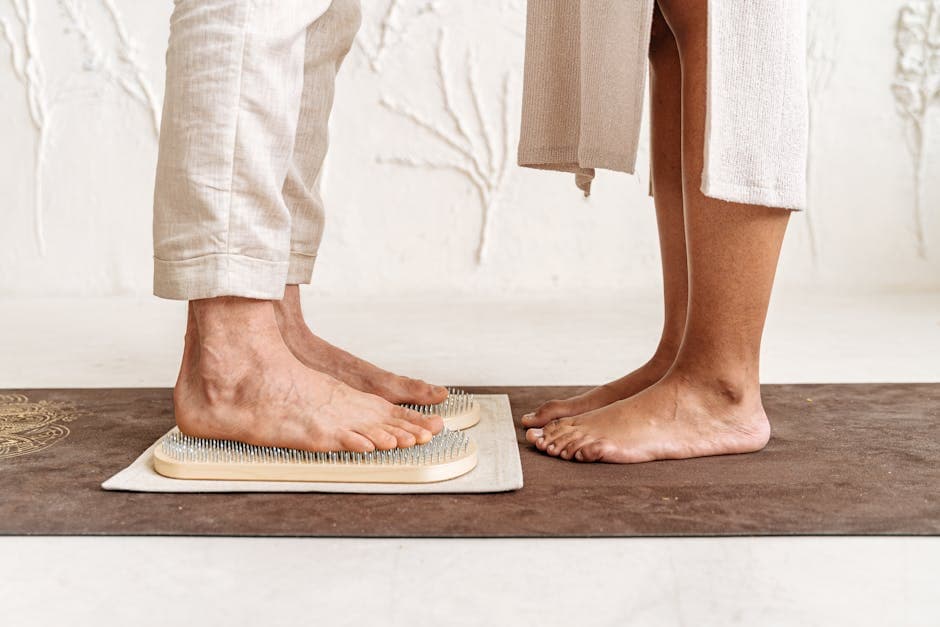
Reflexology is a hands-on practice in which a trained practitioner presses on set areas of the feet, and sometimes the hands or ears, using a map that links those areas to parts of the body. It is usually offered as a relaxation and comfort practice, and it suits seekers who want gentle, non-invasive touch alongside their regular care. This guide explains what reflexology involves, where it comes from, what research does and does not show, and how to find a practitioner.
What reflexology is and how it works
In a session, the practitioner uses thumbs and fingers to apply steady pressure and small, deliberate movements to particular areas of the foot. Hand and ear reflexology exist too, but the foot is the most common focus. You stay clothed apart from your shoes and socks, and you sit reclined or lie on a treatment table.
The practice rests on a reflex map. In the map, areas of the foot are said to correspond to organs and body regions, so the toes relate to the head, the arch to the middle of the body and the heel to the lower body. Practitioners describe pressing these areas as a way to encourage relaxation and balance, usually working through them in a set order.
It helps to separate the framework from the experience. The reflex map is a traditional model, not an anatomical finding, and the studies covered below mostly ask whether sessions change how people feel, not whether the map is accurate. One plausible reading, which most trials are not built to test, is that unhurried touch and focused attention contribute to what people report.
Reflexology also differs from a general foot massage, which works on muscle wherever it feels tight. A reflexologist typically follows a pattern across both feet instead of chasing a single sore spot.
Where reflexology comes from
Modern reflexology took shape in the United States in the early 20th century. It grew out of zone therapy, an idea that the body can be divided into lengthwise zones, with pressure at one point said to influence others in the same zone. The physician William Fitzgerald is generally credited with popularizing zone therapy in the early 1900s.
The physiotherapist Eunice Ingham is generally credited with developing the foot-focused maps and technique in the 1930s and teaching them widely.
Reflexology is sometimes linked to ancient Egypt, usually through a tomb painting that appears to show people working on hands and feet. What that image depicts is open to interpretation, and no direct line to modern reflexology has been established. The ancient story is best read as lore, and the early 20th century story as documented history.
What people use reflexology for
Most seekers come to reflexology for relaxation. Common reasons include a stressful season, tension that is hard to shake, a run of poor sleep or a general sense of tiredness. Others like that it asks very little of them: no undressing, no exercise and no need to talk through anything unless they want to.
It also appears in healthcare settings. A 2026 scoping review of 19 articles, which maps research instead of weighing it, found that reflexology for adults and older adults was mostly studied in hospitalized, post-surgical and cancer-care groups. Foot reflexology made up about 80 percent of the work, and most studies came from Iran and Turkey. That shows where research has gathered, which is not always where seekers will use it.
Reflexology is traditionally used to support relaxation and a sense of wellbeing. It is not a way to address any specific health condition on its own. To browse related topics such as stress, fatigue or sleep, you can explore Gyfts topics and practices.
What the research says
Reflexology has a sizable body of research, but the studies are mostly small and uneven, with the clearest signal for short-term anxiety and comfort and little reliable support beyond that.
A 2024 systematic review in BMC Complementary Medicine and Therapies pooled 26 studies of reflexology in people with cancer, covering 2,465 participants. The studies were of moderate to low quality with mixed results. The authors concluded that a clear statement on effectiveness was not possible, though reflexology looked better than passive control groups for pain, quality of life and fatigue.
Procedure-related anxiety is where the signal is most consistent. A 2026 meta-analysis of eight randomized trials, with 485 people having open-heart surgery, reported lower anxiety with reflexology while warning that the studies varied a great deal. A 2026 review of 10 studies and 913 people having coronary angiography reported lower anxiety straight after the session and 30 minutes later.
Other reviews are less encouraging. A systematic review of foot reflexology in hypertension found that pooled blood pressure changes did not favor reflexology, and a meta-analysis in hemodialysis found no effect on restless legs severity, unlike massage and acupressure.
Safety and who should check first
Reflexology is gentle and non-invasive, and pressure is adjustable, so you stay in control. The main safety issue is not the touch itself but relying on it in place of medical care. Keep your usual appointments and use reflexology as a complement.
It is commonly advised to check with your doctor first if you are pregnant, have had a blood clot or have circulation problems in your legs. The same applies to diabetes with reduced feeling in the feet, a foot injury or fracture, an open wound, a skin infection or recent foot surgery, where firm pressure may not suit you.
Tell the practitioner about every health condition and medication. A reflexologist should not tell you what is wrong with you or suggest you stop a medication. If you have chest pain, sudden swelling in one leg, or symptoms that are new or worsening, seek medical care before booking a session.
Fitting it alongside everyday and conventional care
Reflexology works best as a complement, a calm hour that sits next to the care you already have. It does not replace tests, medication or advice from your clinician.
Tell your doctor or care team that you are trying it, especially if you are in treatment for a serious illness or recovering from surgery. Some hospitals offer reflexology as part of supportive care, so ask whether yours has guidance. Give your reflexologist a short summary of your health and any precautions.
Keep expectations modest. A sensible goal is to feel more relaxed afterward and to notice whether sessions help you unwind or sleep. A short note on how you feel before and after a few visits can help you decide whether to continue.
Finding a practitioner
Look for a practitioner who can describe their training, asks about your health first, and is clear that reflexology complements medical care. Training routes and rules vary by region, so ask what they completed and whether they belong to a professional association.
You can browse reflexology practitioners in the Gyfts directory and read the reflexology modality page. Cost varies by region and practitioner, so ask about fees and session length up front.