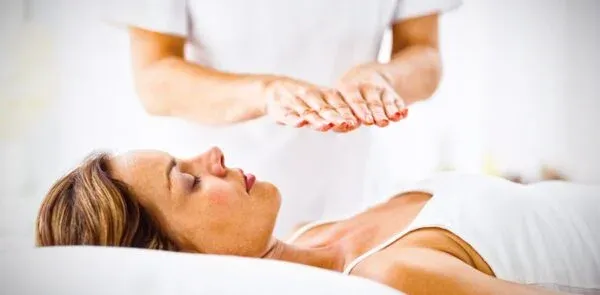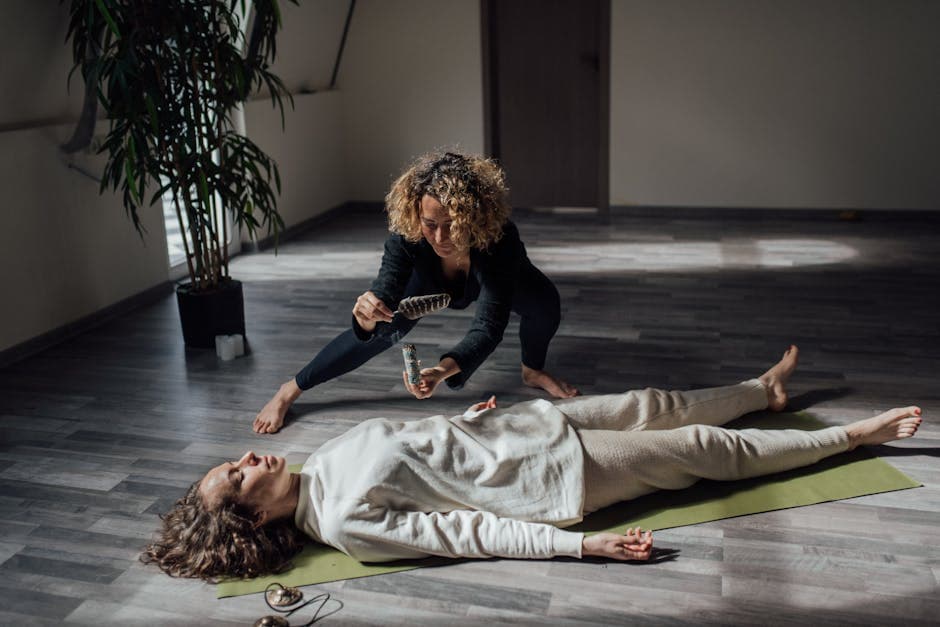
Reiki is a Japanese practice in which a trained practitioner places their hands lightly on, or just above, your body with the intention of supporting relaxation and a sense of balance. It is described as an energy practice, and it suits seekers who want a quiet, fully clothed session without manipulation or exercise. This guide explains what reiki is, where it comes from, what research shows, and how to find a practitioner.
What reiki is and how it works
In a typical session, you lie down or sit, fully clothed, while the practitioner moves through a series of hand positions over or on the head, torso, limbs and sometimes the feet. The touch is light, or there is no contact at all. Sessions are quiet, and many people find the pace slow and calming.
Practitioners describe reiki as channeling a universal life energy, often called ki, to support the body's own capacity to settle and restore balance. That is the tradition's own explanation, and it is a framework of belief, not something that has been measured or confirmed by science. Many seekers approach reiki simply as a structured way to rest, and you do not need to share the belief to book a session.
What can be studied is the experience. Researchers compare reiki with usual care, with rest, or with a sham version in which someone without reiki training imitates the hand positions. Those comparisons matter, because quiet attention and caring presence can themselves help people relax, which is part of why the research picture is hard to read.
Reiki is usually taught in levels. There is no single governing body, so training and standards differ by lineage and by country.
Where reiki comes from
Reiki was developed in Japan in the early 20th century by Mikao Usui, and the word is generally translated as universal energy or spirit energy. Usui's teaching is usually dated to the 1920s. Accounts of his life vary, and some popular stories are lineage traditions, not documented history.
Reiki reached the West through Hawayo Takata, who learned it in Japan and taught it in Hawaii and on the US mainland in the mid-20th century. Over time several schools developed, some close to the Japanese originals and others adapted for Western audiences.
Because reiki grew up as a spiritual and wellness practice instead of a clinical one, its traditional framework is about energy and intention. Its principles and its initiation ritual are covered in separate Gyfts articles, so this guide stays with what the practice is and what research shows.
What people use reiki for
People most often explore reiki for relaxation and stress, for a sense of calm during a difficult season, and for a quiet hour that asks nothing of them. Some come during tiredness or sleep difficulty, and others value it as a restful ritual alongside the rest of their life.
Reiki is also used in some healthcare settings as supportive care. Research has looked at it around surgery, in cancer care, and in palliative care, where the aim is comfort and wellbeing, not changing the course of an illness. People may ask for it for emotional support as much as physical comfort.
Reiki is traditionally used to support relaxation and wellbeing, and it is not a way to address a specific health condition on its own. To see how it sits next to other approaches in the metaphysical category, you can read about the metaphysical approaches to wellbeing or explore related practices.
What the research says
Reiki is rooted in traditional use, and formal research is limited and often low in certainty. Some small trials report short-term relief of pain and anxiety, but the reviews are cautious, and the energy the tradition describes has not been shown to exist.
A 2015 Cochrane review looked for trials of reiki in adults with anxiety or depression and found only three small studies. It concluded that there was insufficient evidence to say whether reiki helps, with no sign of benefit or harm. A 2022 systematic review of 14 placebo-controlled trials in mental health found more favorable effects for some symptoms, but the authors said numbers were small and findings inconclusive.
A 2026 meta-analysis of 15 randomized trials in surgical care found moderate to low certainty evidence of lower postoperative pain and anxiety. The authors warned that placebo effects may have contributed and said routine use could not be recommended yet. A 2026 review of reiki and therapeutic touch in palliative care found the certainty of evidence very low, so no firm conclusion was possible.
A 2026 scoping review of sham-controlled reiki trials found that 12 of 28 studies using a sham practitioner without training showed improvement in the sham group too. That points to a placebo effect and to the value of touch and attention. It does not show that reiki is ineffective, but it limits what can be claimed.
Safety and who should check first
Reiki is gentle and involves light or no touch, so physical risk is low. The more real concern is relying on it in place of medical care. Do not delay an appointment, stop a medication or skip a test because of a session, and be wary of any practitioner who suggests you should.
In palliative care research, reporting of harms was limited, which is a reason for caution and not a sign of risk. Talk to your doctor first if you are pregnant, living with a serious illness, or managing a mental health condition, and let your practitioner know. If lying still is uncomfortable, or touch is difficult for you, say so and ask for a seated or hands-off session.
A practitioner should never claim to identify or explain a condition, promise a result, or ask you to pay for ongoing sessions as the only way to get better. If you have symptoms that are new, severe or getting worse, see a clinician first.
Fitting it alongside everyday and conventional care
Reiki is best seen as a complement, a calm hour that sits next to your usual care, not a replacement for it. Some people book it before a stressful week, others during recovery, and some simply for rest. The 2026 surgical review reached a similar view, describing reiki as a possible complement to established care, not a substitute for it.
If you are in treatment for a serious illness, tell your care team that you are trying reiki, and tell your reiki practitioner about your diagnosis and care plan. Keep your appointments and medications as they are. Notice how you feel in the days after a session and decide whether it adds something worthwhile.
Finding a practitioner
Look for a practitioner who explains their training and lineage, listens before they start, and is clear that reiki complements medical care. Because there is no single governing body, ask what level they have reached and how long they have practiced.
You can browse reiki practitioners in the Gyfts directory and read the reiki modality page. Cost varies by region and practitioner, so ask about fees and session length up front.