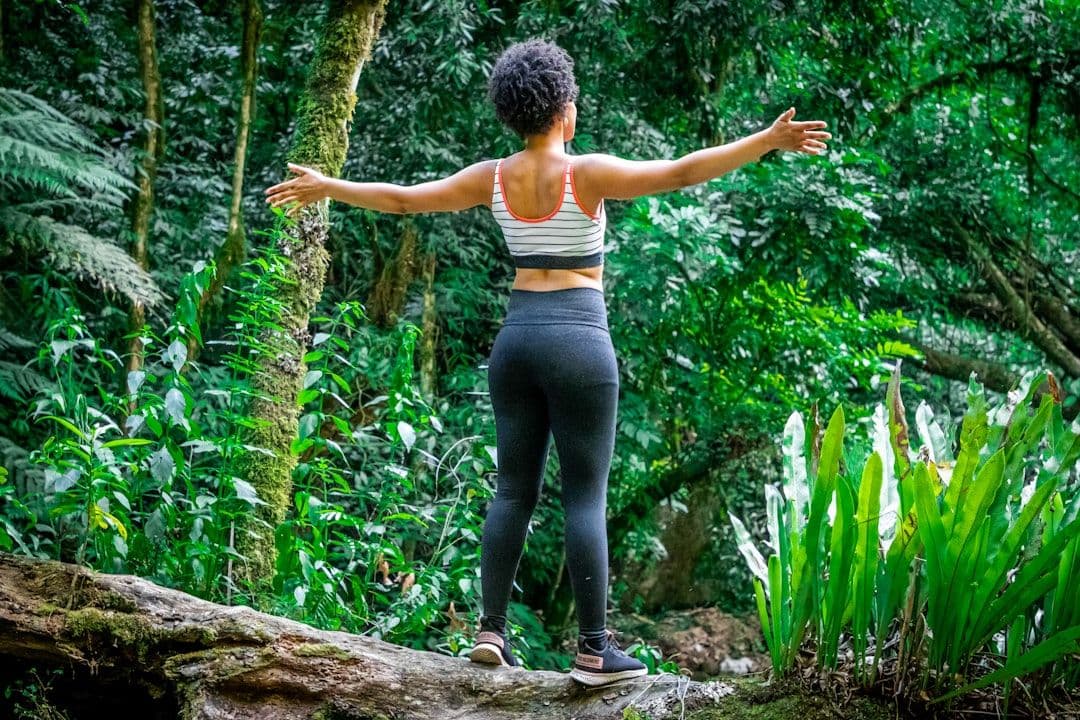
Forest bathing, or shinrin-yoku, is slow, mindful time among trees with no goal except noticing what is around you. Systematic reviews suggest it may support lower stress hormone levels and a better mood compared with urban settings, but study quality varies and research is still limited.
What is forest bathing, and what is it not?
The term shinrin-yoku, often translated as forest bathing, took hold in Japan in the 1980s as a way to encourage people to spend restorative time in woodlands. The word bathing is a metaphor. You are not getting wet. You are soaking in the atmosphere with your senses.
It is not a workout, a nature identification class or a hike to a viewpoint. A session can be a few hundred yards long. If you want local options, the forest bathing page lists guides, and our separate article on traditional Japanese health research covers the wider cultural background.
How do you practice forest bathing step by step?
You do not need special gear. Try this simple sequence for about an hour, or compress it to twenty minutes:
- •Choose a place. A park, wooded trail or tree-lined garden can work. Quiet is helpful, but not essential.
- •Leave the screen alone. Silence notifications and put your phone away, perhaps keeping it for safety only.
- •Arrive. Stand still for a minute and take several slow breaths.
- •Walk slowly. Move at half your normal pace and stop whenever something catches your attention.
- •Rotate your senses. Spend a few minutes each on sound, smell, touch, color and light.
- •Sit. Find a spot to rest for ten to twenty minutes and simply observe.
- •Close. Take a last slow breath and notice how you feel before heading back.
If the mind wanders, that is normal. Gently return to what you can see or hear. Many people find this similar to zen meditation done outdoors.
What does the evidence say about forest bathing?
A 2019 systematic review and meta-analysis looked at 22 studies on cortisol, a hormone often used as a stress marker. In all but two, cortisol was lower after forest exposure than in comparison groups, or lower than before. In the meta-analysis of eight studies, salivary cortisol was lower in forest groups than urban groups. The authors cautioned that data were limited and that expectation effects may play a role (Antonelli et al., 2019).
Another 2019 systematic review of 28 papers reported that forest bathing activities might improve cardiovascular and other physiological measures, and mood, and might reduce anxiety and depression. It also found that randomized studies had higher methodological quality than non-randomized ones, and the authors called for stronger research designs (Wen et al., 2019).
In plain terms, the findings are encouraging but not conclusive. Many studies are small, short and use different methods. Forest bathing may support relaxation and mood for many people, but it should not be seen as a treatment for illness.
Safety and who should check first
Most people can take part safely. Still, be aware of ticks, poison ivy, heat, insects, uneven ground and changing weather. Wear suitable shoes, carry water and tell someone where you are going.
People with pollen allergies or asthma may want to check seasonal conditions. If mobility is limited, pick a flat, accessible path or sit in one spot. Anyone who feels anxious or unsafe outdoors, or has trauma connected to certain environments, can bring a trusted friend or choose a guided group.
How can you build a regular forest bathing habit?
Start small. A weekly twenty minute visit to the nearest green space is easier to keep than an occasional day trip. Try the same spot across seasons and notice what changes: the light, the sounds, the smell of the soil, the birds that appear or disappear. Keeping a few notes can make these small shifts easier to see.
If you like movement, a gentle hatha yoga session under the trees can follow a quiet walk. If you prefer stillness, add a few minutes of meditation at the end.
How do you find a forest bathing guide?
Related reading: the evidence on traditional Japanese health practices gives the wider background, and how to practice zen meditation is a good companion for a quiet walk.
A guide can offer sensory invitations, safe routes and a supportive group. Ask about training, group size, accessibility and weather plans. Use Gyfts Explore to find forest bathing guides and related nature-based practitioners near you.