What it is
A gentle Japanese practice of resting fingertips on specific points, revived by Jiro Murai.
A quiet Japanese practice of holding specific points on the body with light touch, which some people use for relaxation and stress
At a glance
What it is
A gentle Japanese practice of resting fingertips on specific points, revived by Jiro Murai.
Why explore it
Some people use it for relaxation and everyday stress, including through self-help.
How it’s experienced
A quiet, clothed hour of light, held touch, with no massage or pressure.
Evidence context
Studies are small. A randomized nurse study found lower reported stress. The energy model is untested.
See the evidence snapshotSafety
Low risk. It does not replace medical care, so keep seeing your doctor.
See staying safeHistory & Origin
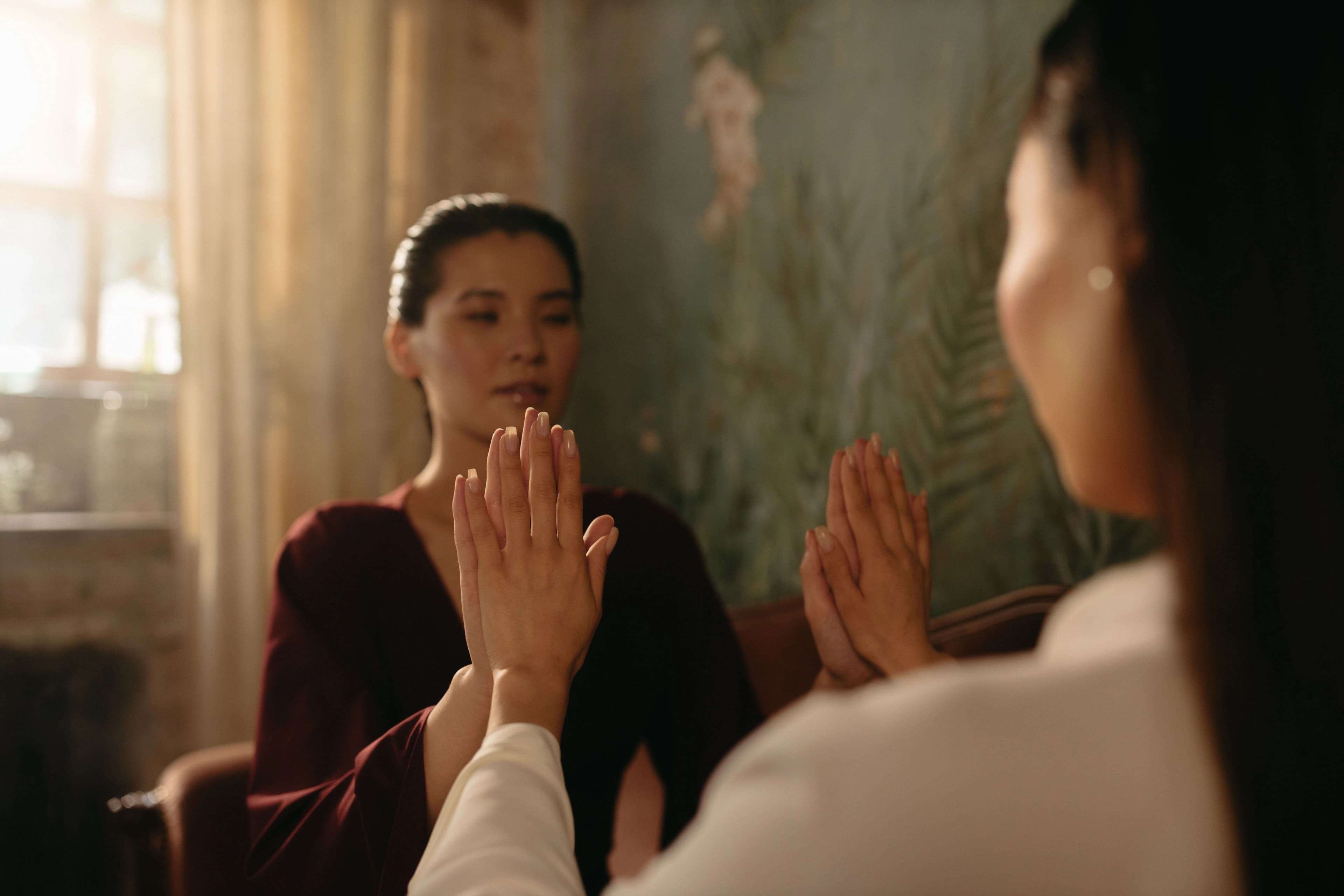
Jin Shin Jyutsu is a gentle Japanese practice in which a practitioner places their fingertips lightly on specific places on the body, held quietly for a few minutes at a time, while you rest fully clothed. The places are called Safety Energy Locks, and the tradition describes energy pathways in the body that can become congested. Practitioners say that holding these points may help with relaxation and a sense of balance. Some people also use it for stress and everyday strain.
Sessions are quiet, with no massage or manipulation, and the touch is light. A second strand of the practice is self-help: simple sequences of holding points on your own body, which practitioners describe as a way to support yourself between sessions. Many people find it calming, and it is sometimes used alongside other holistic or integrative approaches.
Research is small. Studies of Jin Shin Jyutsu self-help among nurses, including a small randomized study, found lower reported stress, and a small uncontrolled study in women with breast cancer reported better adaptation and daily activity. These studies had small samples and self-reported outcomes, and none shows that the energy model is correct. Jin Shin Jyutsu is best seen as a gentle complement to ordinary care, never a way to replace it.
Jin Shin Jyutsu is attributed to Jiro Murai, a Japanese man said to have been born in 1886 into a family of physicians. According to practitioner accounts, he fell seriously ill, conventional treatment failed, and he spent seven days alone in a mountain cabin practicing the art on himself, then recovered. Accounts date his rediscovery of the art to about 1912, after which he spent roughly fifty years researching and refining it until his death, said to be in 1961. He traced the earliest written records of the art to the Kojiki, an ancient Japanese text, and it was passed on mainly by direct teaching.
Mary Iino Burmeister (1918 to 2008), one of his students of many years, brought the art to the United States in 1954, according to practitioner sources, and began teaching in Scottsdale, Arizona, in the early 1960s. She taught for decades, and Jin Shin Jyutsu Inc., based in Scottsdale, was later directed by David Burmeister. At her death she left twenty-one approved teachers, who continue the training in classes and seminars. The art is often described in English as an energy art and, in the US, it is taught and received mainly through private practitioners and self-help classes. Sources are mostly from practitioners, and several dates differ between accounts, so these dates are best treated as approximate.
Mechanism
Jin Shin Jyutsu works through light, quiet touch on specific points, and the energy pathways it describes have not been shown to exist.
Your first visit
A typical session outline to help you feel prepared
Practitioners work differently, but a first Jin Shin Jyutsu session often follows a quiet shape like the one below. You can ask about any step before you book.
The practitioner asks about your health and what you hope for, and explains how the session and the points will work.
You agree where light touch is fine, what to avoid, and that you can pause or stop the session at any time.
Fully clothed, you lie or sit comfortably, and the practitioner may ask how you feel to help choose which points to hold.
The practitioner rests fingertips on a combination of points, usually for several minutes each, with no massage or pressure.
You rest quietly and notice any warmth, calm, or tension changes, treating these as your own experience.
The session ends with a short rest, a reminder that it complements medical care, and a simple self-help sequence to try at home.
The evidence
An honest read on how Jin Shin Jyutsu has been studied — an evidence tier and the research behind it, not a guarantee and not a ranking of “better.”
Valued by experience, with limited formal research
Small studies exist.
All were small and none tested the energy model, so findings are not certain.
Research on these uses is limited to small studies, so it works best as a complement to conventional care.
Safety first
General guidance to help you decide whether this approach is appropriate for you. This is informational only and not a substitute for medical, psychological, or professional advice.
If you are pregnant, managing a health condition, recovering from injury or surgery, or taking medication, consult a qualified healthcare professional first.
Some situations call for extra care or a different approach. Share any conditions, injuries, or sensitivities with your practitioner before your first session.
Look for clear boundaries, transparent pricing, and practitioners who avoid fear-based claims or pressure to book frequent sessions.
Mild, short-lived effects such as tenderness, tiredness, or temporary soreness can occur. Rest, hydrate, and tell your practitioner how you respond.
For you?
A simple, human way to weigh it up. This is general guidance, not personal medical advice — a qualified practitioner can advise on your situation.
Gyfts is a discovery platform, not a medical provider. Nothing here diagnoses, treats or replaces professional care. In an emergency, contact your local emergency number.
Explore approaches
Other practices people often explore alongside jin shin jyutsu.
In their words
Before you book
FAQ
It is a gentle Japanese practice in which fingertips are rested lightly on specific points called Safety Energy Locks. Jiro Murai revived it in the early twentieth century, and Mary Burmeister brought it to the West. It is a complementary practice, not a medical treatment, and studies of it are small.
Only limited evidence exists. A randomized study of 41 nurses found lower self-reported stress after self-help education, and two small pre-post studies reported similar results. These samples were small, relied on self-reports, and did not test the energy model, so benefits remain unproven.
Yes, for most people it is low risk, since the touch is light and non-invasive. The main concern is relying on it in place of medical or mental health care. Tell the practitioner about recent surgery or injuries, and see a doctor first for new, severe, or persistent symptoms.
No. People try it for quiet, relaxation, and self-care without sharing the tradition's energy model. Outside that model, the likely helpful ingredients are light touch, slow breathing, and focused attention. Whether it helps varies from person to person, and the energy pathways described have not been demonstrated.
Yes. Self-help is a central part of the tradition, using simple sequences of holding points on your own body. Many practitioners offer classes. In studies with nurses, daily self-help was associated with lower reported stress. It complements medical care and does not replace it.
References
Educational sources that inform this overview. Inclusion is for context and does not imply endorsement.
Full citations are maintained by the Gyfts editorial team and reviewed periodically.
Keep exploring
Browse practitioners, explore honest overviews, and take what you learn to a conversation — at your own pace.