What it is
A gentle bodywork system of comfortable positioning and light movement, developed by Arthur Lincoln Pauls.
A gentle bodywork system that uses comfortable positioning and light movement, which some people explore for muscle tension and a sense of ease
At a glance
What it is
A gentle bodywork system of comfortable positioning and light movement, developed by Arthur Lincoln Pauls.
Why explore it
Some people use it for muscle tension, stiffness, and a sense of ease.
How it’s experienced
A slow, quiet, clothed hour of supported positioning and light touch.
Evidence context
No trials of Ortho-Bionomy itself were found. Related positional release evidence is very low certainty.
See the evidence snapshotSafety
Low risk. Tell the practitioner about injuries, osteoporosis, blood clots, or pregnancy.
See staying safeHistory & Origin
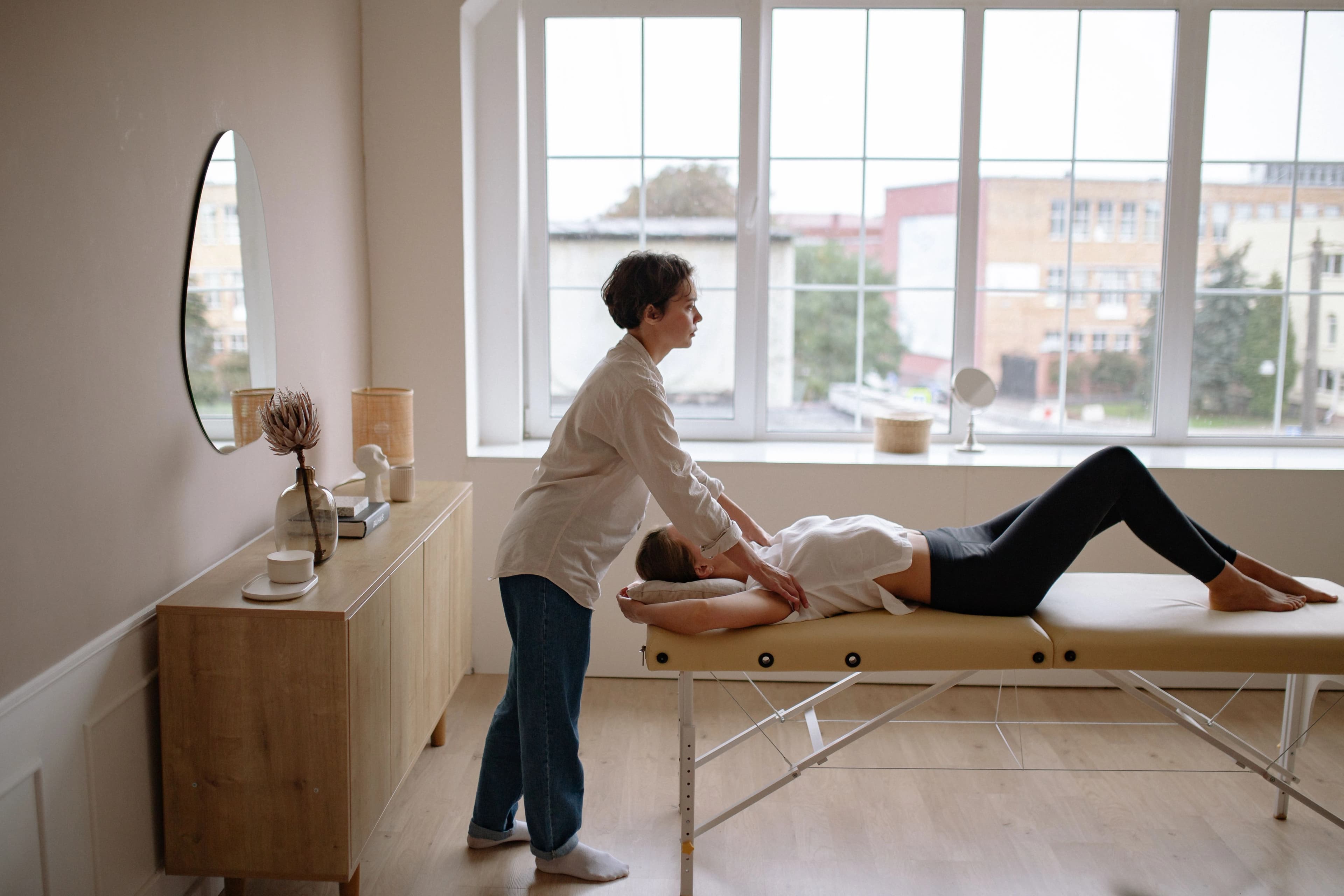
Ortho-Bionomy is a gentle bodywork system in which a practitioner supports you in a comfortable position, often a position of ease for a tense area, and adds light pressure, small movements, and sometimes gentle contact. Instead of pushing against tight muscles, the approach works with the body's preferred positions, on the idea that when the body feels supported it can let go of tension by itself. Some people use it for muscle tension, stiffness, and a sense of ease.
Sessions are slow, quiet, and typically done clothed, on a table, a chair, or the floor, and there is no forceful manipulation. Practitioners may also teach simple self-care movements to use at home. Because it is so gentle, the approach is used with a wide range of people, including those who find deeper manual therapies uncomfortable.
No clinical trials of Ortho-Bionomy itself were found. Related positional release techniques have been studied for low back pain, with very low certainty evidence that they help mainly when added to other treatments. Practitioners describe less tension and easier movement, which have not been shown in controlled studies of Ortho-Bionomy. It is best seen as a gentle complement to ordinary care, never a replacement for it.
Ortho-Bionomy was developed by Arthur Lincoln Pauls (1929 to 1997), a British osteopath who was also an accomplished martial artist and taught judo for about twenty years. One account says he read Lawrence Jones's 1964 paper "Spontaneous Release by Positioning" while still at osteopathic college. Jones, an American osteopath, described easing a tense area by placing the body in its position of comfort, and that idea inspired Pauls to work with the body's preferred postures rather than against them. He coined the name from Greek roots, which he explained as the correct application of the laws of life.
Pauls developed the system through the 1970s and began teaching in the United States in 1976, in Berkeley, California, before teaching widely in the UK and Europe. His first students became teachers and carried the work forward. The Society of Ortho-Bionomy International, founded in 1984, oversees training for practitioners and instructors and owns the trademark for the term in the US. Training is now available in the United States, Canada, Australia, New Zealand, and Europe. Ortho-Bionomy is offered mainly by massage therapists, bodyworkers, and some osteopaths and naturopaths, and a reference work notes it has grown in popularity since Pauls's early teaching, without citing clinical research.
Mechanism
Ortho-Bionomy works through comfortable positioning, light pressure, and small movements, and its proposed mechanism has not been tested.
Your first visit
A typical session outline to help you feel prepared
Practitioners work differently, but a first Ortho-Bionomy session often follows a gentle shape like the one below. You can ask about any step before you book.
The practitioner asks about your health, injuries, and what is bothering you, and explains how the session will run.
You agree where touch is fine, what to avoid, and that you can ask for a change of position or stop at any time.
The practitioner gently positions you, often with pillows and support, in a way that eases a tense area.
The practitioner adds light pressure or small movements, checking in with you about what feels comfortable.
You slowly move out of the position and notice how the area feels, treating the result as your own experience.
The session ends with a short rest, a reminder that it complements medical care, and any simple movements to try at home.
The evidence
An honest read on how Orthobionomy has been studied — an evidence tier and the research behind it, not a guarantee and not a ranking of “better.”
Valued by experience, with limited formal research
No clinical trials of Ortho-Bionomy itself were found.
Support rests on practitioner experience, so results are not certain.
These uses come from practitioner experience and have not been tested in trials of this method.
Safety first
General guidance to help you decide whether this approach is appropriate for you. This is informational only and not a substitute for medical, psychological, or professional advice.
If you are pregnant, managing a health condition, recovering from injury or surgery, or taking medication, consult a qualified healthcare professional first.
Some situations call for extra care or a different approach. Share any conditions, injuries, or sensitivities with your practitioner before your first session.
Look for clear boundaries, transparent pricing, and practitioners who avoid fear-based claims or pressure to book frequent sessions.
Mild, short-lived effects such as tenderness, tiredness, or temporary soreness can occur. Rest, hydrate, and tell your practitioner how you respond.
For you?
A simple, human way to weigh it up. This is general guidance, not personal medical advice — a qualified practitioner can advise on your situation.
Gyfts is a discovery platform, not a medical provider. Nothing here diagnoses, treats or replaces professional care. In an emergency, contact your local emergency number.
Explore approaches
Other practices people often explore alongside orthobionomy.
In their words
Before you book
FAQ
It is a gentle bodywork system developed in the 1970s by British osteopath Arthur Lincoln Pauls. The practitioner supports your body in comfortable positions and uses light pressure and small movements. It is a complementary practice, not a medical treatment, and no trials of it were found.
No clinical trials of Ortho-Bionomy itself were found. A 2025 review of related positional release technique for low back pain found very low certainty evidence, mainly when added to other treatments. Reports of benefit come largely from practitioners and personal experience.
Yes, for most people it is low risk, since the work is gentle and works with comfortable positions. A reference work describes it as suitable for newborns, older adults, and people after surgery. Tell the practitioner about injuries, osteoporosis, blood clots, or pregnancy, and see a doctor first for new or severe pain.
It uses no forceful manipulation or joint cracking. Where those approaches may correct a restriction directly, Ortho-Bionomy moves the body toward positions of comfort and adds light pressure. It was inspired by the osteopath Lawrence Jones's positional release idea, and it is taught and certified separately.
No, it is designed not to. The work is slow and comfortable, and you can ask the practitioner to stop or change position at any time. Mild tiredness or a feeling of looseness afterward is common. See a doctor if you feel sharp pain, or if discomfort is severe or lasts more than a day or two.
References
Educational sources that inform this overview. Inclusion is for context and does not imply endorsement.
Full citations are maintained by the Gyfts editorial team and reviewed periodically.
Keep exploring
Browse practitioners, explore honest overviews, and take what you learn to a conversation — at your own pace.