What it is
A divination practice using symbolic characters from Norse traditions for reflection and insight.
Ancient symbols for modern self-reflection and insight
At a glance
What it is
A divination practice using symbolic characters from Norse traditions for reflection and insight.
Why explore it
Some people explore it for symbolic self-reflection and a fresh view on life questions.
How it’s experienced
A reader casts or draws runes and talks through their meanings in relation to your questions.
Evidence context
Rooted in tradition with no formal research, so any value is personal and reflective.
See the evidence snapshotSafety
Low risk. Not a substitute for medical, legal, or financial advice, or mental health care.
See staying safeHistory & Origin
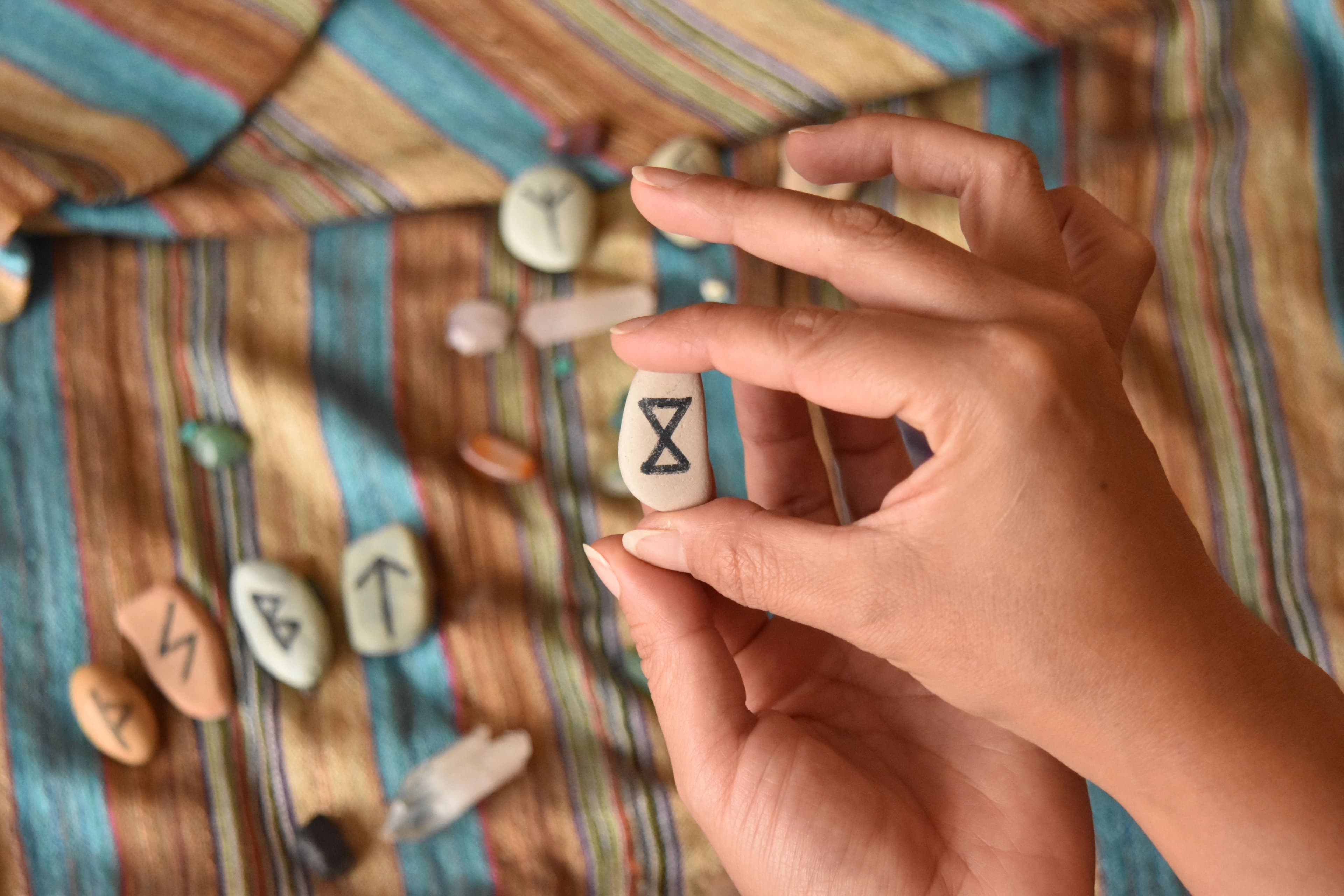
Rune reading is a divination practice rooted in ancient Germanic and Norse traditions, in which a set of symbolic characters, known as runes, are cast, drawn, or laid out and interpreted to offer guidance, reflection, or insight. Each rune carries its own symbolic meaning, often associated with natural forces, human experiences, and archetypal themes such as transformation, strength, communication, or uncertainty. Practitioners use rune sets carved or inscribed on stone, wood, bone, or ceramic tiles, consulting them as a tool for introspection rather than prediction in any literal sense.
Within holistic wellness circles, rune reading is often approached as a contemplative practice, a structured way to pause, reflect on current circumstances, and explore the inner landscape of one's thoughts, emotions, and intentions. Some practitioners suggest that the act of engaging with rune symbolism may help individuals access their own intuition, clarify decision-making, or gain a sense of perspective during challenging times. It is typically offered alongside other complementary modalities and is considered a metaphysical practice rather than a clinical or therapeutic intervention.
Rune reading sits within the broader category of symbolic divination systems, which also includes practices such as tarot and oracle card reading. Its appeal has grown in contemporary wellness culture as interest in ritual, symbolism, and meaning-making continues to expand. Whether approached as a spiritual practice, a meditative tool, or simply a framework for self-reflection, rune reading is generally understood as a personal and experiential pursuit, and its value is largely interpreted through the lens of individual belief and cultural tradition.
Runes are among the oldest known writing systems associated with Germanic and Norse peoples, with early inscriptions dating back to approximately the 2nd century CE. The Elder Futhark, consisting of 24 characters, is considered the oldest and most widely used runic alphabet and formed the basis for later variants including the Younger Futhark and the Anglo-Saxon Futhorc. Runes were used historically for writing, marking possessions, memorializing the dead, and, according to historical and archaeological evidence, ritual and magical purposes.
In Norse mythology, the god Odin is said to have sacrificed himself on the world tree Yggdrasil for nine days and nights in order to gain knowledge of the runes, lending them a sacred and esoteric dimension in the mythological tradition. Over centuries, runic knowledge became associated with wisdom, magic, and hidden understanding. The modern use of runes as a divination tool was largely developed and popularized in the 20th century, particularly following the publication of works by authors and occultists who adapted historical runic symbolism into contemporary spiritual and divinatory frameworks. Today, rune reading is practiced globally within pagan, heathen, and broader New Age and wellness communities.
Mechanism
Rune reading works through the symbolic interpretation of ancient characters believed to carry archetypal meaning and energetic significance.
Your first visit
A typical session outline to help you feel prepared
A rune reading guides you through drawing ancient symbol tiles and exploring their meanings in conversation with a practitioner who tailors insights to your life.
Your practitioner greets you and takes a few minutes to help you feel at ease, briefly explaining how rune readings work and what to expect from the session.
You're invited to share what's on your mind, a situation, decision, or open question. You can be as specific or as general as you like; there's no wrong way to show up.
Together you decide how many runes to draw, a single rune for a focused snapshot, or a multi-rune spread for a layered look at past, present, and future energies.
You either draw tiles from a bag or cast them onto a cloth, depending on the practitioner's style. This is your moment to hold your question in mind and let intuition guide your hands.
Your practitioner turns over each rune and walks you through its traditional meaning, symbols like Fehu for abundance or Hagalaz for disruption, woven into the context of your situation.
The session becomes a dialogue. You're encouraged to respond, push back, or share what resonates, helping the practitioner refine how the symbols speak to your specific life.
Near the close, your practitioner offers an overall reflection on the spread as a whole, highlighting any patterns, tensions, or themes that emerged across the runes.
You may receive notes on the runes drawn or suggestions for a single daily rune practice to continue the reflection on your own in the days ahead.
The Evidence
What the research says — and doesn't say — about rune reading as a reflective and spiritual practice.
Rooted in tradition, not clinical research
Rune reading has no peer-reviewed evidence base and is not evaluated by clinical research. It is best understood as a symbolic, contemplative practice with deep historical roots rather than a tool for health outcomes.
Rune reading is classified as traditional-use only. There are no controlled studies, systematic reviews, or peer-reviewed trials examining its effects. As a symbolic and metaphysical practice, it does not lend itself to conventional research methods, and no specific outcome claims are supported by evidence.
Within the MACH framework, rune reading sits firmly in the Metaphysical category. It works through symbol, meaning, and personal interpretation rather than physiological mechanisms. Approaching it as a contemplative or spiritual tool — rather than expecting measurable health outcomes — reflects its actual nature and tradition.
General research on meaning-making and ritual suggests that structured introspective practices can support psychological clarity and reduce anxiety. This does not apply specifically to rune reading, but it offers a plausible frame for why some individuals find value in it as a personal reflection tool.
The Elder Futhark is among the oldest Germanic writing systems, with documented use in inscription, memorial, and ritual contexts. Modern divination use developed largely in the 20th century. Understanding this history helps distinguish the practice's cultural heritage from inflated outcome claims sometimes made in contemporary wellness settings.
This practice is considered low risk for most people. Those with anxiety, obsessive thinking patterns, or difficulty separating symbolic interpretation from literal reality should approach it cautiously, ideally alongside support from a mental health professional. It should never replace qualified professional assessment for medical, psychological, legal, or financial concerns.
Rune reading cannot assess, manage, or address health conditions, and practitioners should not make health-related claims on its behalf. If a session surfaces difficult emotions or unresolved psychological material, seeking support from a licensed mental health provider is encouraged. Transparency about the practice's nature and limits is essential in any wellness context.
Safety first
General guidance to help you decide whether this approach is appropriate for you. This is informational only and not a substitute for medical, psychological, or professional advice.
If you are experiencing severe distress, suicidal thoughts, psychosis, acute trauma, or another serious mental health concern, seek qualified support first.
This approach is not suitable for diagnosis, treatment instructions, or decisions that require medical, legal, financial, or professional advice.
Look for clear boundaries, transparent pricing, and practitioners who avoid fear-based claims or pressure to book frequent sessions.
Treat any insight as one reflective perspective, not absolute truth. Important decisions should be considered with appropriate professional support.
For you?
A simple, human way to weigh it up. This is general guidance, not personal medical advice — a qualified practitioner can advise on your situation.
Gyfts is a discovery platform, not a medical provider. Nothing here diagnoses, treats or replaces professional care. In an emergency, contact your local emergency number.
Explore approaches
Other practices people often explore alongside rune reading.
In their words
Before you book
FAQ
Rune reading is not typically framed as fortune-telling in a literal sense. Most contemporary practitioners approach it as a reflective tool that uses symbolic imagery to encourage introspection and personal insight rather than to predict specific future events. The value of a reading is generally considered to lie in what it prompts the individual to notice or consider about their own circumstances.
Rune reading is practiced by people from a wide range of cultural backgrounds, and there is no formal requirement of ancestry or heritage to engage with it as a personal practice. That said, some practitioners and communities within Norse and Germanic spiritual traditions hold thoughtful perspectives on cultural context and stewardship, which individuals may wish to research and consider as they explore the practice.
Rune reading is a metaphysical practice and is not a form of medical treatment, so it does not interfere with conventional care in a clinical sense. Some individuals use it as a complementary reflective or spiritual practice alongside other wellness activities. It should never be used as a substitute for medical advice, diagnosis, or treatment from a licensed healthcare provider.
In a rune reading, you draw or cast symbol tiles and explore what they might say about your question or situation. A practitioner helps weave the meanings into a thoughtful, conversational reflection tailored to your life. Sessions typically run 30 to 60 minutes, and many people also pull a single rune each morning as a simple daily ritual.
Rune reading carries no known direct physical risks and is generally considered safe as a reflective practice. If you tend toward anxiety or obsessive thinking, or find it hard to separate symbolic interpretation from literal reality, approach it cautiously and consider speaking with a mental health professional. Avoid using a reading to make significant medical decisions, and keep it as a space for reflection.
References
Educational sources that inform this overview. Inclusion is for context and does not imply endorsement.
Full citations are maintained by the Gyfts editorial team and reviewed periodically.
Keep exploring
Browse practitioners, explore honest overviews, and take what you learn to a conversation — at your own pace.