Acupressure is a hands-on practice from traditional Chinese medicine in which firm pressure from the fingers, thumbs or palms is applied to specific points on the body, usually through clothing. It suits people who want a needle-free practice they can also learn to use at home, often for nausea, tension or stress. This guide explains what acupressure involves, where it comes from, what research shows and who should check first.
What acupressure is and how it works
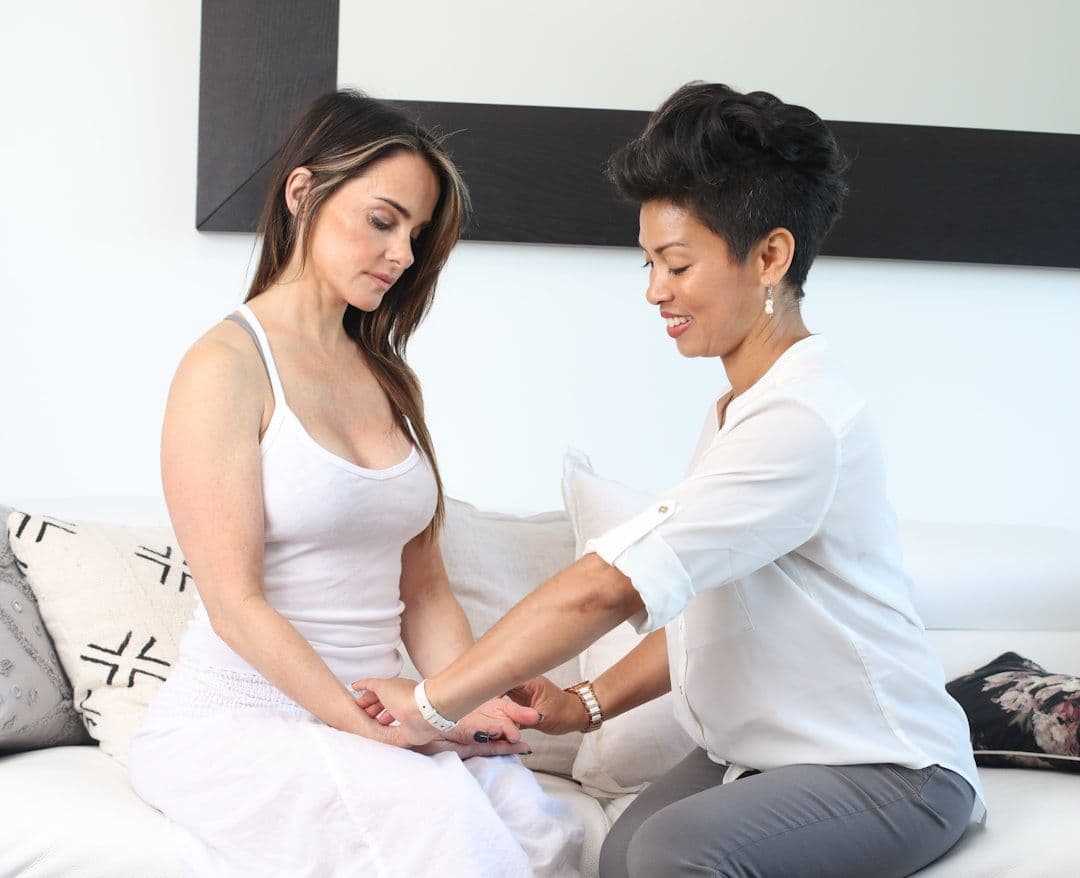
Acupressure uses the same map of points as acupuncture, but instead of needles the practitioner presses with a thumb, fingertip, palm, knuckle or elbow, sometimes with a small tool. Pressure may be held steadily on one point or applied in a slow rhythm along a line of points. A session usually takes place on a padded table or in a chair while you stay dressed, and many practitioners finish by teaching you one or two points to press yourself.
There are several styles. Point-specific acupressure focuses on a few chosen points. Shiatsu, from Japan, uses rhythmic pressure along whole pathways. Ear acupressure places small seeds or beads on points of the ear for gentle ongoing pressure. Acupressure wristbands press on a point on the inner forearm known as PC6, which is widely used for nausea.
Traditional Chinese medicine explains acupressure through qi, a vital energy said to flow along channels called meridians. This framework is traditional and has not been confirmed by science. Researchers have suggested that firm pressure stimulates nerves in the skin and muscle, and that the calm, focused attention of a session helps people relax, but how acupressure produces the effects seen in trials has not been established.
Where acupressure comes from
Acupressure grew out of the same tradition as acupuncture. Pressing and massaging points on the body has long been part of Chinese medicine, alongside needling, herbal medicine and the therapeutic massage known as tui na. The theory of points and channels was set out in classical texts such as the Huangdi Neijing, compiled roughly 2,000 years ago. Claims that acupressure itself is thousands of years older are hard to verify.
Pressure-based practices spread across East Asia and took different forms, including shiatsu, which was developed in Japan in the twentieth century. Acupressure became more widely known in the West during the twentieth century, alongside growing interest in acupuncture. Today it is practiced by acupuncturists, shiatsu practitioners, massage therapists and other bodywork practitioners, and it is often taught as a self-care skill.
What people use acupressure for
People explore acupressure for many everyday reasons: to ease nausea, including after surgery, during chemotherapy or in early pregnancy; to calm stress and nerves before a procedure; to relieve muscle tension, headaches or menstrual cramps; for comfort during labor; and to help them wind down for sleep.
Its appeal is practical. It needs no needles, carries little risk when done gently, and once you have learned a point you can use it almost anywhere, such as in a waiting room or on a long journey. Many people value it as something they can do for themselves between appointments.
These are reasons people try acupressure, not promises of a result, and research supports some uses more than others. Gyfts covers the best-studied area in its review of acupressure for nausea, and walks through a visit in what happens during an acupressure session.
What the research says
Acupressure has meaningful research support in a few areas, especially nausea after surgery, but most of the evidence is low certainty and studies of stress and anxiety are small. A 2025 Cochrane network meta-analysis of 77 trials with 9,847 people found that stimulating the PC6 wrist point without needles, for example with acupressure or wristbands, may reduce nausea and vomiting after surgery compared with sham, with low confidence in the result. An earlier 2015 Cochrane review found no difference between wrist point stimulation and six antiemetic drugs.
For anxiety, a 2015 review in Acupuncture in Medicine pooled five trials comparing acupressure with sham and found a medium-sized drop in anxiety before surgery or treatment, though results varied. A 2025 meta-analysis of five trials with 573 people having a heart procedure reported less pain and anxiety. These studies measure nerves before a procedure, not everyday stress.
Elsewhere, results are uncertain. A 2020 Cochrane review of labor pain rated most acupressure findings very low certainty, with moderate-certainty evidence of a small drop in pain intensity against a combined control. A 2016 Cochrane review of period pain found too little evidence to say whether acupuncture or acupressure helps.
Safety and who should check first
Acupressure is low risk when done gently. In the 2025 Cochrane review of wrist point stimulation, no study reported serious or long-term complications, and side effects such as skin irritation, redness and swelling were minor and short-lived, although the evidence on harms was very uncertain. Pressure should feel firm but never sharp, and you can ask for a lighter touch at any time.
Avoid pressure over broken skin, bruises, varicose veins, recent injuries, fractures or swelling. Talk with your doctor first if you are pregnant, since some points are traditionally avoided, or if you have a bleeding disorder, take blood thinners, have severe osteoporosis or a history of blood clots. Persistent nausea, unexplained pain and new symptoms need a clinician.
Fitting it alongside everyday and conventional care
Acupressure fits most easily as a self-care tool alongside other care. If you are facing surgery, chemotherapy or nausea in pregnancy, ask your care team whether wristbands or acupressure points would suit you, and keep using the medicines they prescribe. Wrist point stimulation performed about the same as antiemetic drugs in the 2015 Cochrane review, and evidence for combining the two is inconclusive.
For stress, acupressure can be one of several calming habits, alongside sleep, movement and support from people you trust, or from a therapist if anxiety is affecting daily life. Keep expectations modest. If you like point work but want a larger research base, ask about acupuncture.
Finding an acupressure practitioner
Acupressure is offered by acupuncturists, shiatsu practitioners, some massage therapists and other bodywork practitioners, and training varies widely. Ask about their training, whether they hold a license in a related field, and whether they will teach you points for home use. Browse the Gyfts directory, read the acupressure modality page, or explore related approaches. Cost varies, so ask about fees up front.