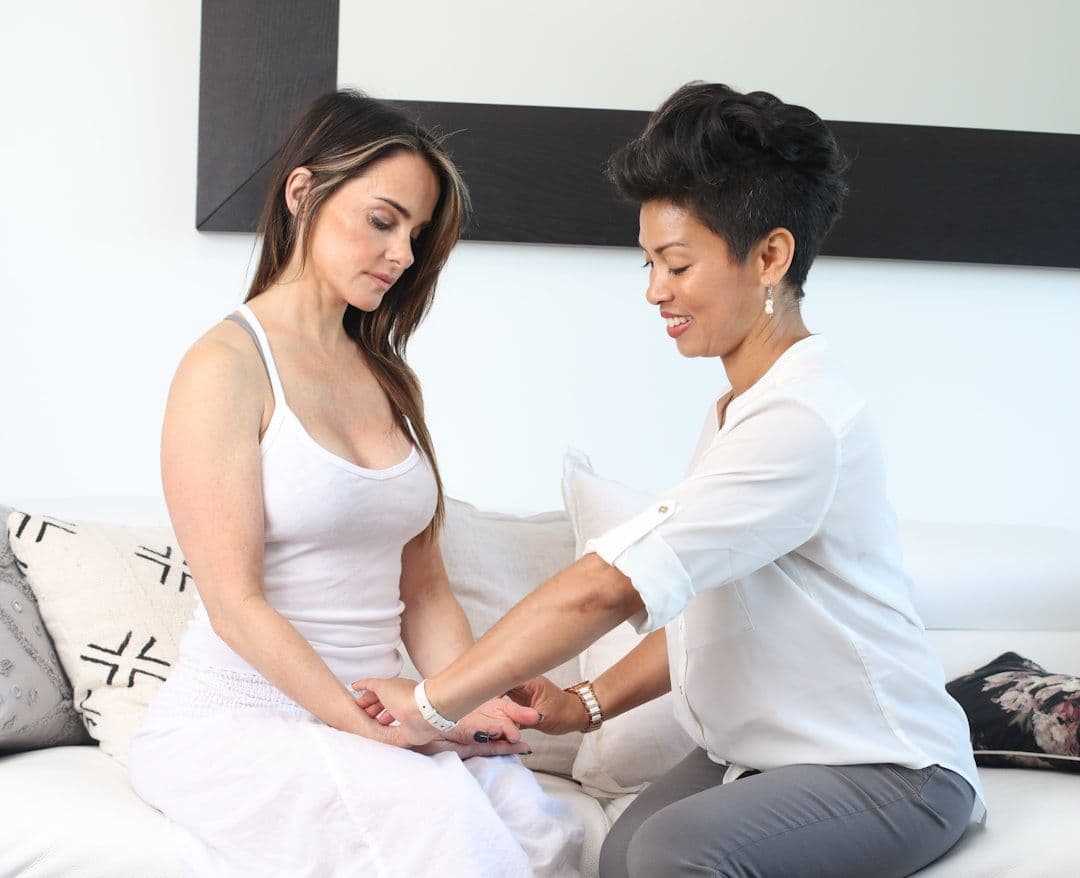
An acupressure session usually starts with a conversation about your health and what you hope for. You then rest fully clothed on a padded table or in a chair while the practitioner presses specific points on your body with their fingers, thumbs or palms, holding each one or pressing in a slow rhythm. Many sessions end with a few simple points you can press yourself at home. This guide walks through what to expect when you try acupressure, from booking to aftercare.
Before you book
Acupressure is offered by acupuncturists, shiatsu practitioners, some massage therapists and other bodywork practitioners. Training and regulation vary by place and by profession, so ask each practitioner about their training, how long they have practiced and whether they hold a license in a related field. Browse the Gyfts directory or explore related approaches to compare options.
Before your first visit, think about what you would like from the session, such as help relaxing during a stressful time. Tell the practitioner about injuries, recent surgery, pregnancy, bleeding disorders, blood thinners, osteoporosis, any history of blood clots and any areas you do not want touched. Ask how they describe the evidence, and how they would work alongside your doctor.
When you arrive
Expect a quiet room with a padded table or a comfortable chair. The practitioner will ask about your health history, sleep, stress and any areas of tension or pain, and may use a short intake form. Practitioners trained in traditional Chinese medicine may also look at your tongue and feel your pulse at both wrists.
It helps to know that tongue and pulse reading is part of a traditional framework for choosing points, not a medical test. A 2019 trial found that 38 acupuncturists agreed only weakly with one another when assessing the same cases this way. Wear loose, comfortable clothing, since you stay dressed throughout. The practitioner should explain what they plan to do and how you can ask them to change or stop anything.
During the session
Every practitioner works a little differently, and what follows is a typical shape rather than a script. Once you are settled, usually lying on your back or front, the practitioner locates points using landmarks such as bones, tendons and creases in the skin. The point map comes from traditional Chinese medicine, which describes points along pathways called meridians; that framework is traditional and has not been confirmed by science.
The practitioner then applies pressure, usually with a thumb or fingertip, sometimes with the palm, knuckle or elbow, or occasionally with a small tool. Some hold steady pressure on one point for a short time before moving on, while shiatsu-style work uses rhythmic pressing along a line of points. Pressure should feel firm but bearable, sometimes described as a dull ache, and never sharp. Some practitioners also work points on the ear, occasionally taping small seeds or beads in place for gentle pressure between visits.
The practitioner may work on areas linked to your concern as well as points on the hands, arms, legs, feet, back, shoulders, neck or head. Breathe slowly and let them know at once if any pressure is too strong; good practitioners check in often. The room is usually quiet, and many people drift into a relaxed, drowsy state.
Toward the end, many practitioners show you one or two points to press yourself, such as the point on the inner forearm a few finger widths above the wrist crease, known as PC6 or P6, which is often used for nausea. They will show you how to find it, how firmly to press and for how long. Self-acupressure should feel comfortable, and you should skip any point over broken or sore skin.
What you might notice
People describe a range of experiences, and no particular feeling is required. Many feel relaxed or sleepy. Some notice a dull ache, warmth, tingling or a sense of release where pressure is applied, and some feel emotional. Others notice little during the session but feel calmer afterward.
Mild soreness or redness at pressure points can happen. Reviews of acupressure studies, including a 2025 Cochrane review of wrist point stimulation for nausea after surgery, describe side effects as minor and short-lived, such as skin irritation, redness and swelling. Tell the practitioner right away if anything feels painful or wrong. These sensations are not guaranteed, and they are not proof of any effect on your health.
Afterward
Sit up slowly and take a moment before standing, since some people feel lightheaded after lying still. Drink some water if you like, and give yourself a calm hour if you can. The practitioner may suggest how often to use your self-acupressure points and when to come back.
Notice how you feel over the next day or two, and mention it at your next visit. If you are in medical care, let your care team know you are using acupressure, especially if you are using it for nausea, pain or another symptom they are managing.
Length, frequency and cost
Session length varies by practitioner and setting. Many sessions last somewhere between half an hour and an hour, including time for the health conversation and rest at the end. Ask how long your session will be when you book.
How often you go depends on what you want. Some people try one session mainly to learn self-acupressure, others book a short series, and some go occasionally during stressful periods. Cost varies by region, setting and practitioner, and some acupuncturists include acupressure within a wider session, so ask about fees and any insurance coverage up front.
Questions to ask and when to check with your doctor first
Useful questions include: What training do you have? Which points will you use, and why? Can you teach me points to use at home? How do you describe the evidence for my concern? How do you work alongside my doctor?
Check with your doctor first if you are pregnant, have a bleeding disorder or take blood thinners, have severe osteoporosis, a history of blood clots, recent surgery or a serious or undiagnosed health problem. Acupressure complements medical care and does not replace it, and new or severe symptoms need prompt medical attention.