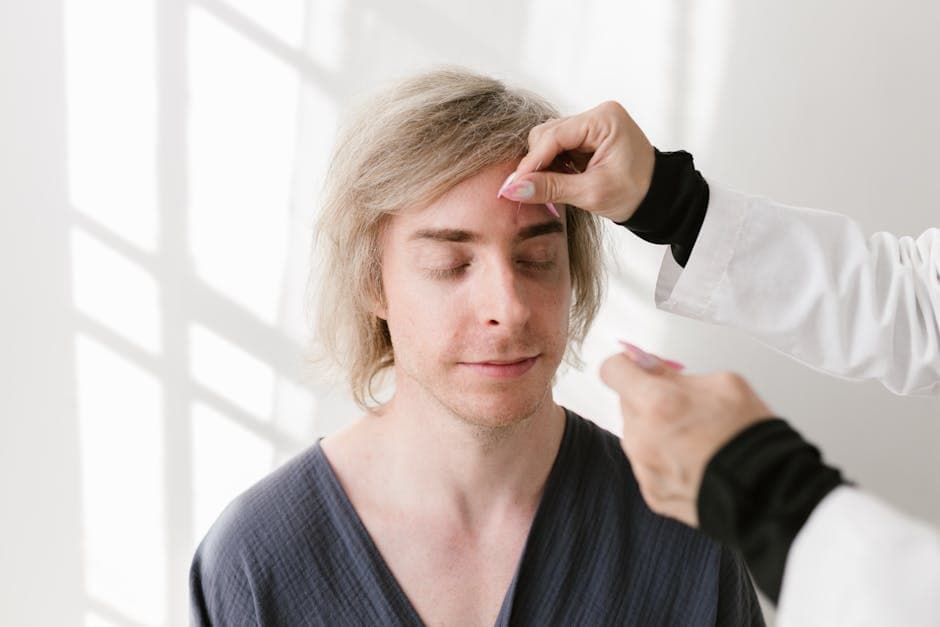
Craniosacral therapy is a gentle, hands-on practice in which a practitioner rests their hands lightly on your head, neck, spine and pelvis, aiming to ease tension and help you relax. You stay fully clothed and the pressure is very light. People often look into it for chronic pain, headaches or stress, or because firmer bodywork feels like too much. This guide explains what craniosacral therapy involves, where it came from, what studies show and who should check first.
What craniosacral therapy is and how it works
In a typical session you lie face up on a padded table, fully clothed. After a conversation about your health, the practitioner places their hands beneath your head, at the base of your skull, along your spine or at the sacrum, the flat triangular bone at the base of the spine. They hold each position for a while with pressure often compared to the weight of a coin. There is no cracking, kneading or oil, and the room is usually quiet.
Practitioners describe a subtle rhythm, which they call the craniosacral rhythm, and link it to the fluid that surrounds the brain and spinal cord. They say they can feel restrictions in this rhythm and in the tissues around the brain and spine, and gently ease them, partly by encouraging small movements of the skull bones. Some styles, such as biodynamic craniosacral therapy, focus more on stillness than on technique.
It is worth being plain about this model. Research has not shown that practitioners can reliably feel a craniosacral rhythm, and the proposed movement of adult skull bones has not been demonstrated. In a 2006 study, light forces like those used in a common craniosacral technique produced no measurable movement at a skull seam in rabbits and no change in pressure inside the skull. What you can count on is quiet, attentive, light touch and time to rest.
Where craniosacral therapy comes from
Craniosacral therapy grew out of cranial osteopathy. In the early 1900s the American osteopath William Sutherland proposed that the bones of the skull move in a rhythmic pattern connected to the fluid around the brain and spinal cord. His ideas became a branch of osteopathic practice, and a 2016 review notes that World Health Organization benchmarks for osteopathy training, released in 2010, treated cranial work as an important osteopathic skill.
In the 1970s the osteopathic physician John Upledger built on Sutherland's work and developed craniosacral therapy as its own method, which he taught widely beyond osteopathy. Today it is offered by massage therapists, physical therapists and other practitioners as well as osteopaths. Descriptions of the rhythm as a deep source of health are beliefs within the practice, not documented findings.
What people use craniosacral therapy for
Most people who try craniosacral therapy are looking for relief or calm. Common reasons include chronic pain, neck pain, headaches and migraine, fibromyalgia, jaw tension, stress and poor sleep. Others choose it because they want bodywork that feels safe and slow after an injury, or simply a quiet hour during a hard stretch.
Parents sometimes bring babies for colic or feeding difficulties, and some practitioners work with children. These are reasons people explore the practice rather than proven uses. A 2012 review found only seven studies that tested craniosacral therapy on its own; they reported less pain and better general well-being, but the authors rated their methods only moderate in quality.
If headaches are your main concern, the craniosacral therapy and headaches research review looks at that question on its own. For any persistent symptom, it makes sense to get a medical assessment first and see craniosacral therapy as something you might add alongside it.
What the research says
The evidence is limited, and the main reviews disagree. A 2019 meta-analysis of 10 trials with 681 people with chronic pain reported less pain and disability with craniosacral therapy than with usual care, sham treatment or other manual therapies, lasting up to six months. A 2024 systematic review of 15 trials covering any condition found no meaningful benefit for headache, neck pain, low back pain, pelvic girdle pain or fibromyalgia, or for infant colic, preterm infants or cerebral palsy.
A 2023 meta-analysis of four headache trials found a small drop in pain that was not clinically important, with very low certainty. A 2016 trial of 54 people with chronic neck pain found less pain after eight weekly sessions than with a light-touch sham, and at three months, but it was one small trial.
Studies of the underlying claims agree more. When two osteopaths felt 11 people at the same time in a 2001 study, their readings of the rhythm agreed poorly or not at all. In a 1998 study of 40 adults, each examiner was fairly consistent with themselves, but the two examiners barely agreed with each other, and the authors raised the possibility that the rhythm is illusory. A 2016 review concluded that diagnostic procedures in cranial osteopathy are unreliable in many ways.
Safety and who should check first
Craniosacral therapy is gentle, and serious problems appear rare. In the 2019 meta-analysis, five of the 10 trials reported safety data, none recorded a serious adverse event, and minor effects were similar between groups. An older 1999 review noted one study that reported negative side effects in people with traumatic brain injury, so a recent head injury is a reason to ask your doctor first.
Also check with your doctor if you have had a concussion, bleeding in or around the brain, an aneurysm or raised pressure in the skull. Get a new, severe or changing headache checked medically before booking any bodywork. Babies with colic, poor feeding or unusual head shape should be seen by a pediatric clinician. The biggest risk is indirect: relying on a gentle practice while a serious problem goes unassessed.
Fitting it alongside everyday and conventional care
Craniosacral therapy fits best as a complementary comfort practice. For chronic pain, approaches with stronger evidence, such as staying active, guided exercise and care from your medical team, remain the foundation, and craniosacral therapy can sit alongside them if you find it helpful.
Tell your doctor or physical therapist that you are trying it, and keep taking any medicines you have been prescribed. Set modest expectations: you may find sessions calming, and some people report less pain, but the research does not show that it reliably changes the course of a condition.
Finding a craniosacral therapy practitioner
Craniosacral therapy is offered by people with different backgrounds, so ask about the practitioner's main professional license and their craniosacral training. Look for someone who takes a health history, respects your limits on touch and is honest about the evidence. Browse the Gyfts directory or the craniosacral therapy modality page. Fees vary, so ask up front.
