Sound healing is a relaxation practice in which a practitioner plays instruments such as singing bowls, gongs, tuning forks or the voice while you lie or sit and listen. It is for seekers who want a quiet, restful experience and are curious about what it involves, and it takes no skill on your part. This guide explains how sound healing works, where it comes from, what studies have and have not shown, and how to find a practitioner.
What sound healing is and how it works
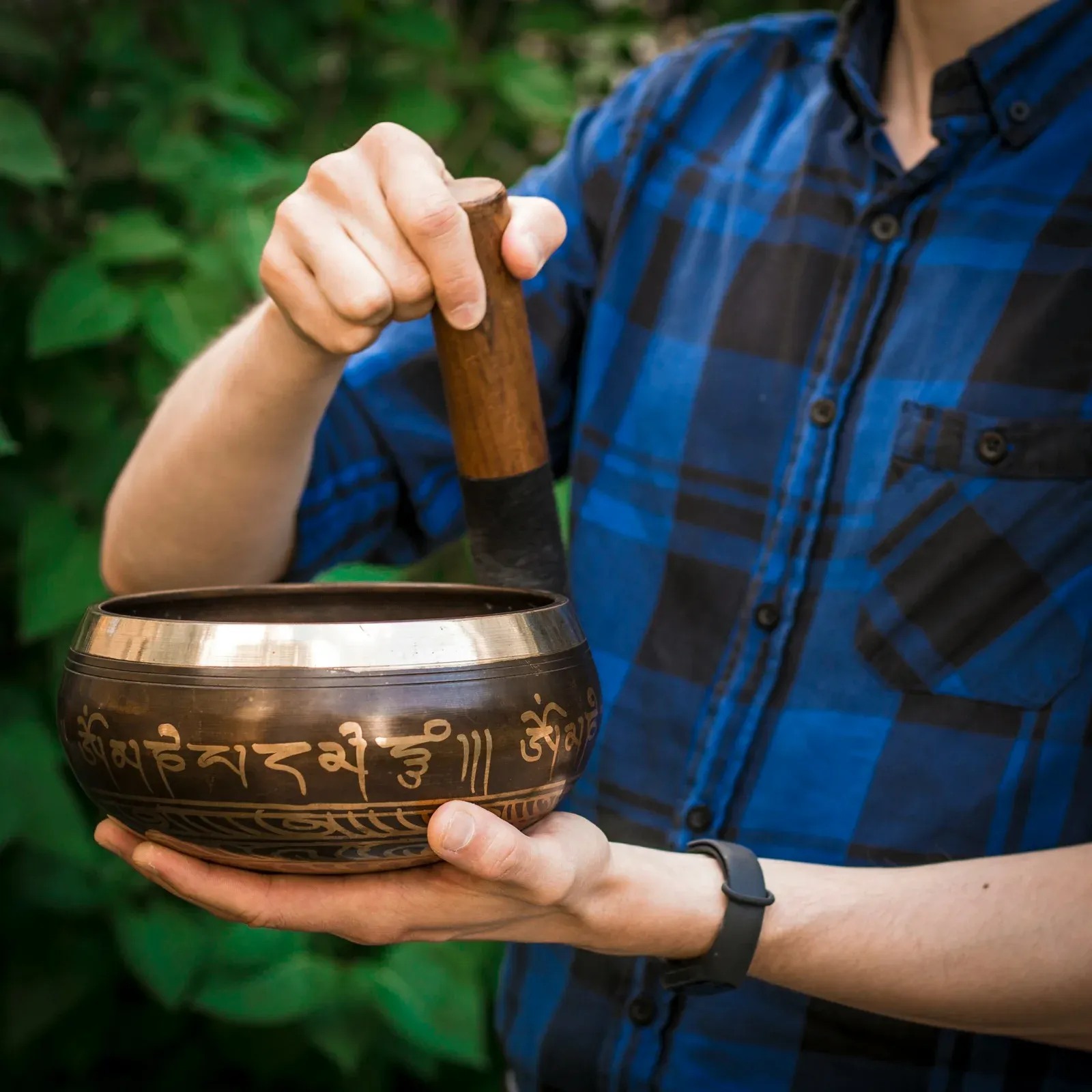
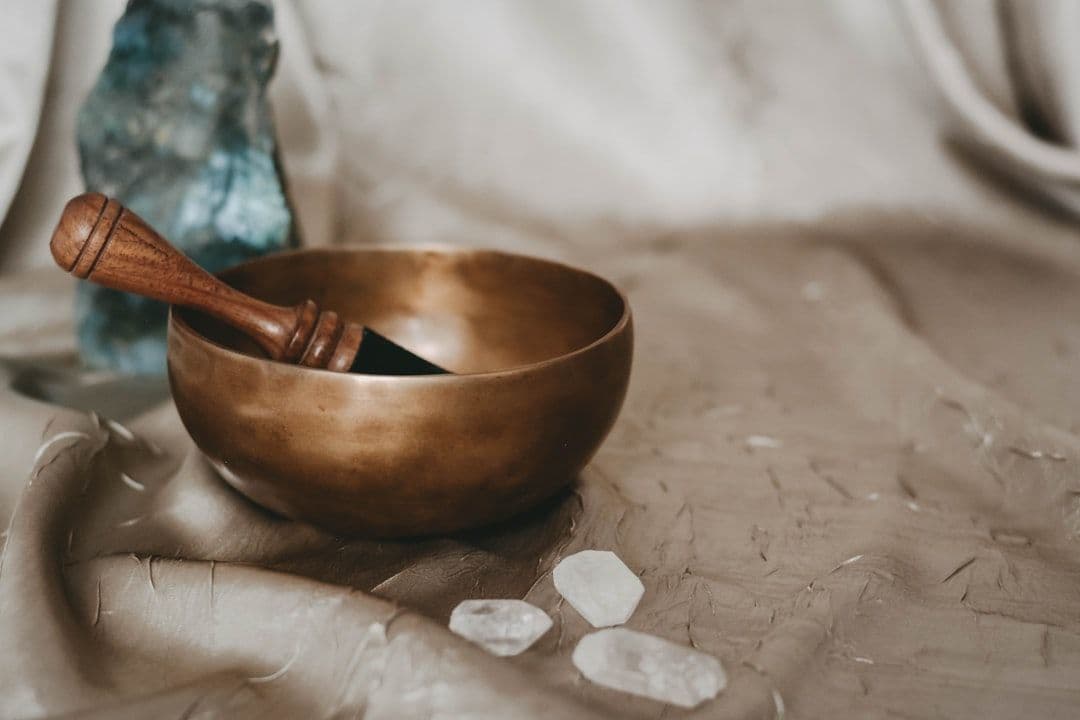
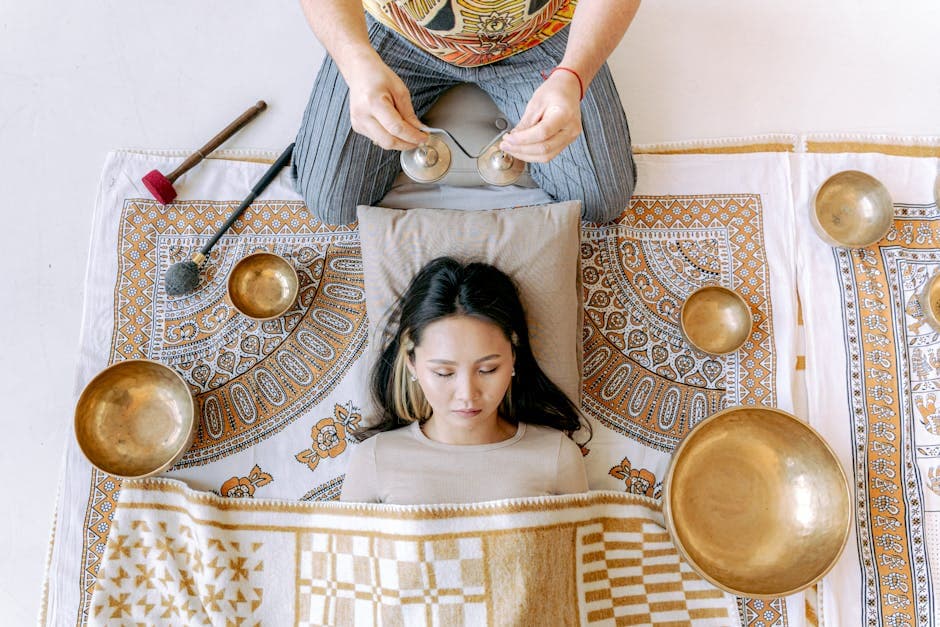
In a typical session, you rest in a comfortable position, often lying down with a blanket, while a practitioner plays sustained, resonant sounds. A singing bowl is struck or rubbed around the rim so it rings and hums for a long time. A gong produces a swelling wash of sound. Tuning forks make a pure, steady tone, sometimes held near the body. Some practitioners add chimes, drums or voice. Group sessions are often called sound baths, since you are invited to be immersed in sound.
There are a few ideas about why this might feel good. Slow, sustained sound gives the mind something simple to rest on, in a way that resembles meditation. The setting invites you to stop doing anything for a while. Some people also feel the vibration of a bowl or gong in the body. These are plausible explanations for relaxation, not settled mechanisms.
Many practitioners go further and describe particular tones as clearing energy or balancing parts of the body. Those are beliefs within the tradition, and they are not claims that research has established. A fair way to approach sound healing is as a structured listening and rest practice, with any spiritual meaning being yours to bring or leave.
Where sound healing comes from
People in many cultures have used drums, bells, gongs, chanting and other instruments in ritual, ceremony and rest for as long as records exist. That broad history is the cultural background of sound healing, but it is tradition and not clinical evidence. Singing bowls are often called Tibetan and are traditionally used to promote relaxation and healing, though the exact origins of the bowls and of the way they are used today are debated.
The modern format, in which a practitioner leads a group in lying down and listening, is a contemporary wellness practice and is much newer than the instruments. It has no single governing body or universal training standard. That means the experience varies a good deal from one practitioner to another, and it is one reason to ask about background and approach before you book.
What people use sound healing for
Most people try sound healing for relaxation. They are looking to ease everyday stress, unwind after a demanding stretch, settle before sleep or find a way into stillness when sitting meditation feels difficult. Others come hoping for lifted mood, comfort during illness or time that feels set apart from a busy life.
The research literature reflects this. Singing bowl studies have involved general adults, people with emotional distress, older adults, and people living with cancer, chronic pain or sleep problems. Outcomes are mostly about anxiety, mood, sleep, heart rate and similar measures of relaxation, which is a narrower question than whether sound can affect a medical condition.
These are reasons people explore the practice, not promises of any outcome. You can browse the conditions people explore and symptoms hubs to see how sound healing sits alongside other approaches for the same concerns.
What the research says
The research on sound healing is early, and it mostly concerns relaxation and mood. A 2025 systematic review in Integrative Medicine Research found 19 clinical studies of singing bowls, published from 2008 to 2024, of which nine were randomized controlled trials. The authors concluded that singing bowls may have potential to ease anxiety and depression and improve sleep quality, and noted that the studies mainly focused on mental health outcomes.
A second 2025 review in Healthcare of 14 quantitative studies of Tibetan singing bowls reported that most found reductions in anxiety and depressive symptoms, and some found increases in heart rate variability and lower heart rate. The authors did not run a meta-analysis because the studies were too varied and too few, and they called for more rigorously designed controlled trials.
The idea that exact tones matter is not supported so far. In a 2026 experiment with 59 healthy adults, singing bowl sounds at 40, 73 and 110 Hz all increased positive emotions and decreased negative ones, and the researchers found no discrete effects related to stimulus type or frequency. Together, the research suggests that relaxation and mood are what has been studied, that results are encouraging but preliminary, and that frequency or energy claims remain unsupported.
Safety and who should check first
Sound healing is generally gentle, and one review above describes it as a low-risk, non-invasive approach, although it rests on small studies. The main practical concern is sound itself. Loud or sustained sound, especially gongs, can bother people with hearing loss, tinnitus, migraine or sensitivity to noise. Earplugs are an option, and a practitioner can adjust volume and placement.
Check with your doctor first if you are pregnant, have an implanted medical device, have a serious or worsening condition or have a history of trauma. Tell your practitioner before anything is placed on or near your body. Deep relaxation can also bring up emotion or unexpected memories, so take it slowly if that has happened to you before, and stand up gradually afterward.
Fitting it alongside everyday and conventional care
Sound healing is best understood as complementary. It can sit alongside the care your clinicians recommend as a way to rest, but not as a replacement for it. Some people use it as a regular pause, a way to wind down before a demanding day or a gentle complement to a meditation or breathing practice.
If you are already seeing a doctor or therapist, tell them you are trying it, particularly if you are managing pain, sleep difficulties, anxiety or low mood. Sleep routines, movement and time outdoors matter whatever you choose, and sound can be one part of that picture.
Finding a sound healing practitioner
Because training varies widely, ask about a practitioner's background, how they structure a session and how they handle questions about health. Be wary of promises to heal a condition or of pressure to buy packages. Browse practitioners in the Gyfts directory, read the sound healing modality page or explore related approaches. Cost varies, so ask about fees and session length up front.