Tai chi is a Chinese movement practice that links slow, continuous postures with steady breathing and relaxed attention. It is for anyone who wants gentle, low-impact movement, including older adults, people who sit most of the day, and seekers curious about mind-body traditions. You can explore the practice on the tai chi modality page, and this guide explains how it works, where it comes from, what research has examined, and how to start safely.
What tai chi is and how it works
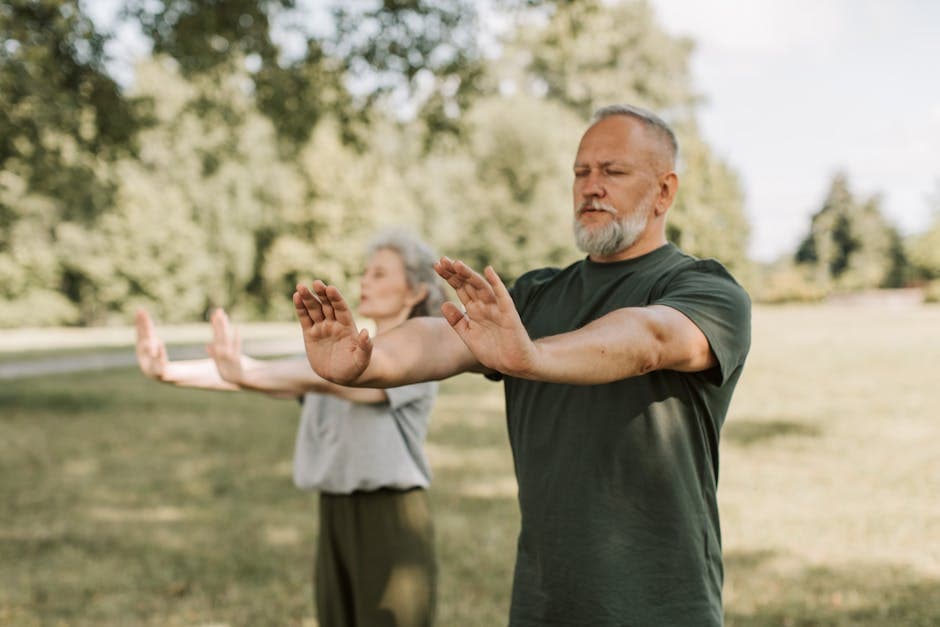
A tai chi class is built from forms, which are set sequences of postures joined by gradual shifts of weight. You rarely stop between moves. Instead you flow from one posture to the next, usually standing, with soft knees and a pace slow enough that each transition takes a few seconds. Many moves have names drawn from images, such as parting the wild horse's mane, and a short form can take only a few minutes to complete.
Three things happen at once. The body moves through a wide range of positions, which asks the legs, hips and trunk to work in a controlled way. The breath stays natural and unhurried, and many teachers invite you to let it follow the movement. And attention stays on the body, noticing weight, balance and the feeling of each step, which is why tai chi is often called moving meditation.
Practitioners often explain the practice through qi, a traditional idea of vital energy moving through the body, and through principles such as rootedness and relaxation. These concepts come from Chinese tradition and serve as teaching language. Researchers have mostly studied tai chi in measurable terms such as balance, leg strength, mood and pain, so this guide keeps the two ideas separate. Styles and intensity vary, so one class can feel quite different from another.
Where tai chi comes from
Tai chi, written taijiquan in the pinyin romanization, began as a Chinese martial art. Its history is usually traced to the Chen family village in Henan province, and the Chen style is generally regarded as the oldest of the family styles. Other well-known styles, including Yang, Wu and Sun, developed from it over later generations.
Stories that credit a single legendary founder, or give a precise date for the first form, are lore rather than documented history, and historians disagree on details. Better documented is the twentieth-century shift in emphasis: in the 1950s, Chinese sports authorities published a simplified 24-form sequence aimed at general health rather than combat, and shorter sets like it are now taught worldwide.
Today tai chi lives in two worlds: a martial art and cultural tradition, and a gentle exercise offered in community settings. Gyfts places it in the Alternative category, the label for complete systems with long histories. That label describes the tradition, not the strength of the evidence.
What people use tai chi for
Most people come to tai chi for one of a few reasons. The most common is steadiness: older adults, and people who have felt less sure on their feet, often look for movement that practices balance and weight shifting in a calm setting. Others want gentle exercise that does not jolt the joints, especially when stiffness or soreness makes higher-impact activity unappealing.
A second group comes for the mind-body side. Slowing the pace and following the breath gives many people a quiet, structured way to wind down, and some explore tai chi alongside their efforts to manage everyday stress or to sleep more comfortably. Practitioners describe these as common reasons people explore the practice, not guaranteed outcomes.
Others use it as a supportive routine during chronic health conditions, with their care team's agreement, or enjoy the social side of a regular group class. Balance, stress and joint stiffness are the related topics listed on this page, and researchers have studied several of them, as the next section describes.
What the research says
Tai chi has meaningful research support, strongest for balance in older adults and thinner or more mixed for other outcomes. A 2026 systematic review pooled 423 randomized trials of exercise for balance in adults aged 60 and over (33,901 participants). Eighteen of 19 exercise types improved overall balance, and tai chi had the largest estimate for global balance. The authors caution that this does not establish that any one type is superior.
Balance is not the same as fewer falls. A 2026 review of ten trials that measured both falls and fear of falling, including tai chi among several interventions, found no consistent improvement in both. In older adults with frailty or sarcopenia, a 22-trial review of Chinese mind-body exercise, including tai chi, found low-certainty evidence of small gains in a timed walking test and called the evidence insufficient to support routine implementation.
For pain, a 2026 review of 38 trials reported lower pain with tai chi in osteoarthritis and low back pain, non-significant results in fibromyalgia, and no serious tai chi-related adverse events. A network meta-analysis of 23 trials in older adults with depressive symptoms ranked tai chi highest among the mind-body exercises compared, with its authors urging caution. Across these reviews, certainty is limited by risk of bias and varied comparison groups.
Safety and who should check first
Tai chi is gentle, and the pain review above found no serious tai chi-related adverse events in its included trials. Even so, it is exercise, and people in trials may differ from everyone who might join a class. Minor issues include sore knees or hips from holding bent-knee postures, and loss of balance if you push beyond your range.
Talk with a clinician before starting if you have osteoporosis, a recent fracture or surgery, a joint replacement, dizziness or fainting, significant balance problems, a heart or blood pressure condition, or are pregnant. Tell the instructor about injuries so postures can be adapted, and stay within a pain-free range. Stop and seek care for chest pain, faintness or sharp pain. Be cautious of anyone who says tai chi can replace medical care.
Fitting tai chi alongside everyday and conventional care
Think of tai chi as a complement, not a substitute. It can sit beside physical therapy, medication, and other exercise, and some people use it as a gentle bridge back to movement after a period of inactivity. If you are working with a physical therapist or physician on balance, pain or recovery, let them know you are interested, and ask which movements to avoid or modify.
In practice, consistency matters more than intensity. A short sequence at home plus a weekly group class is an approach many instructors describe. If you take medication that can cause dizziness, mention it to your clinician before class, and share notes on how you feel afterward at your next appointment.
Finding a tai chi practitioner
Look for an instructor with real experience teaching beginners, and ask which style they teach, how long they have taught, and whether classes can be adapted for injuries, age or a chair. Credentials for tai chi vary widely and there is no single universal standard, so a trial class is often the best test. Browse the Gyfts directory for practitioners, or explore related approaches. Ask about fees up front, since they vary by region and practitioner.