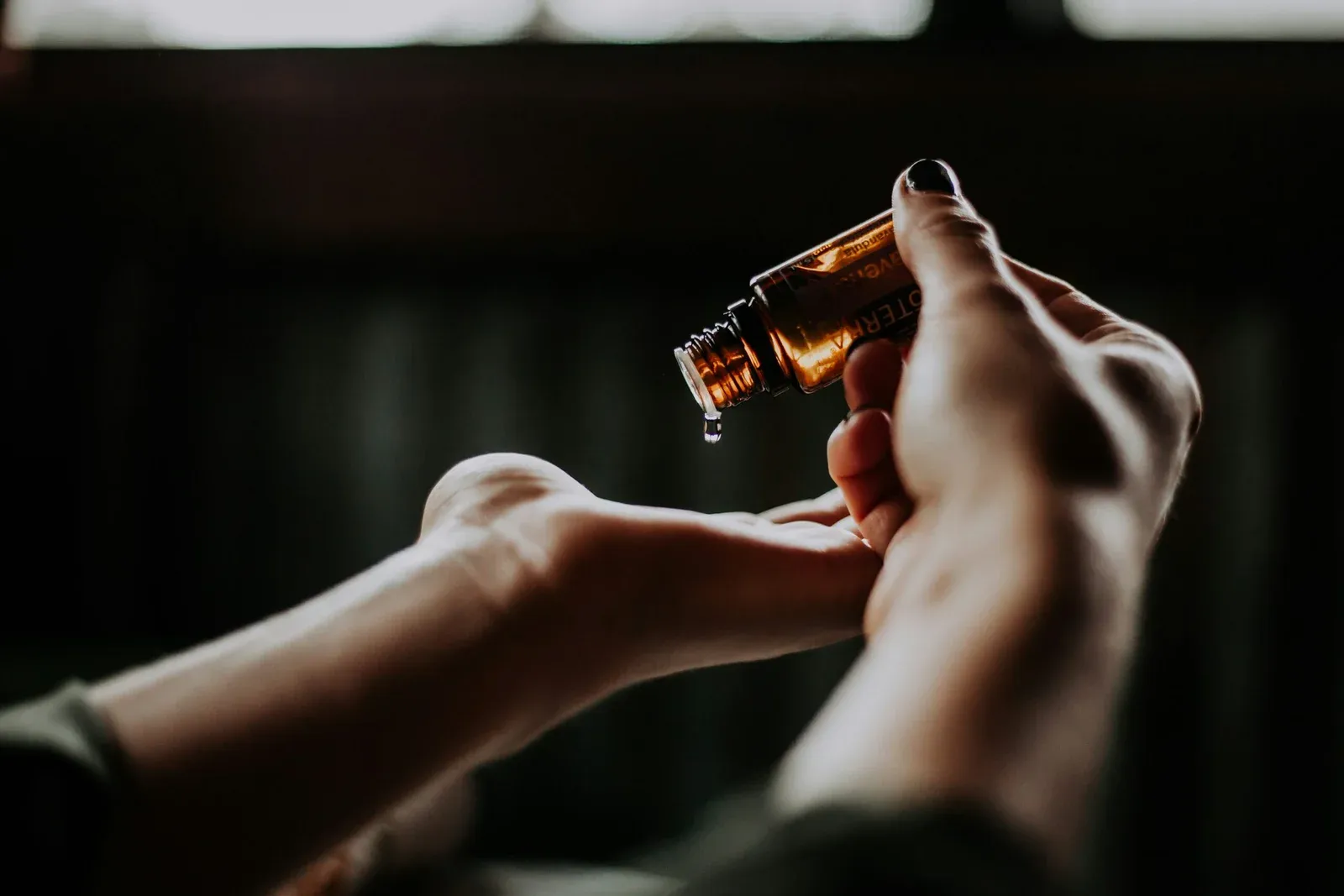
Aromatherapy is the use of essential oils, the concentrated aromatic oils extracted from flowers, leaves, bark and other plant parts, to support relaxation and a sense of wellbeing. People breathe in the scent or apply oils diluted on the skin, often as part of massage. This guide is for anyone curious about aromatherapy, whether at home or with a practitioner, and covers how it works, what the research shows and how to use oils safely.
What aromatherapy is and how it works
An essential oil is a highly concentrated mix of volatile plant compounds, usually made by steam distillation or, for citrus peels, by pressing. A single bottle may hold the oil from a large amount of plant material, which is why a few drops go a long way and why undiluted oil can irritate skin. Common choices include lavender, peppermint, rose, bergamot, eucalyptus and tea tree.
There are three main ways to use them. Inhalation means breathing in the scent from a diffuser, a cotton pad, a personal inhaler stick or steam. Topical use means applying oil diluted in a carrier oil, such as sweet almond or jojoba, to the skin. Aromatherapy massage combines diluted oils with hands-on massage, so scent and touch work together.
How it might work is still incompletely understood. When you smell something, signals travel from the nose to brain areas involved in emotion and memory, which may help explain why a scent can feel calming or bring back a memory. Small amounts of some compounds can also be absorbed through the lungs or skin. Part of the effect is likely to come from the setting itself: a quiet room, slow breathing, gentle touch and someone paying attention to you. Personal liking for a scent matters too, and no oil suits everyone.
Where aromatherapy comes from
Aromatic plants and their oils have a long history in perfumery, religious ritual and traditional healing in many cultures. Modern aromatherapy is much more recent. The word itself is usually credited to the French chemist Rene-Maurice Gattefosse, who used it in the early 20th century, and the practice grew in Europe through the 20th century, often linked with massage and beauty therapy.
Over time, aromatherapy moved into clinical settings, where nurses and other staff began offering it as a comfort measure for anxiety, nausea and sleep problems, including in hospitals and palliative care. Today it ranges from home diffusers and skincare products to sessions with a trained aromatherapist. Training standards for aromatherapists vary widely between countries and schools, so the label alone tells you little about a practitioner's background.
What people use aromatherapy for
Most people explore aromatherapy for everyday comfort rather than a specific illness. Common reasons include winding down after a stressful day, building a calming bedtime routine, easing nerves before a medical or dental procedure and creating a pleasant atmosphere at home. Some people use it alongside massage to help them relax more deeply.
Researchers have studied aromatherapy in many settings: anxiety before surgery or heart procedures, sleep in people with other health conditions, nausea in pregnancy, menopause symptoms, labor pain, agitation in dementia and comfort during cancer care. For cancer in particular, see our separate review of aromatherapy in cancer care, which covers that research in depth.
These are reasons people try aromatherapy, not promises of any outcome. You can browse the conditions and symptoms hubs to see how it fits alongside other approaches, including plain massage.
What the research says
The research results are mixed: many small trials report short-term benefits, especially for anxiety, but the overall quality of evidence is low. A 2012 overview in Maturitas found 10 systematic reviews covering hypertension, depression, anxiety, pain and dementia, judged most of them poor in quality and concluded that the evidence was not convincing for any condition.
Newer pooled reviews are more positive about anxiety. A 2020 review in the Journal of Affective Disorders combined 32 trials and reported lower anxiety scores after inhalation and massage. A 2019 review of 22 lavender trials found a moderate reduction in self-rated anxiety and lower heart rate. A 2025 review of 27 publications with 2,072 people reported better sleep scores with inhaled oils, while noting a lack of blinding and no testing of oil purity.
The weak points are consistent. Scent is hard to disguise, so participants usually know which group they are in, and many trials compare aromatherapy with no extra attention at all. Reviews of menopause symptoms and labor pain rated the certainty of their findings as low or very low, and a 2026 consensus on dementia agitation described aromatherapy evidence as inconsistent or low quality. Benefits, where seen, are mostly measured right after use.
Safety and who should check first
Essential oils are not harmless scents. A 2012 review of case reports found 71 people with adverse effects ranging from mild to severe, including one death; skin inflammation was the most common, and how often reactions happen is unknown. Dilute oils before skin contact and stop if a rash appears. Never swallow essential oils, and keep them away from children: eucalyptus oil, for example, can cause seizures and has been fatal when swallowed.
Take care with children and pets. A 2007 report linked repeated skin use of lavender and tea tree products to breast growth in three young boys, which resolved when the products were stopped. Concentrated tea tree oil has caused tremors and weakness in dogs and cats, especially small cats. If you are pregnant, have asthma or migraines triggered by smells, or are in medical treatment, check with your clinician first.
Fitting it alongside everyday and conventional care
Aromatherapy works best as a small, pleasant addition to good basic care, not a replacement for it. If you are dealing with ongoing anxiety, low mood or poor sleep, talk with a clinician about approaches with stronger evidence, and use aromatherapy, if you enjoy it, as one comfort among several.
In hospital or during treatment, ask your care team before bringing oils, since scent can bother people nearby and some settings limit them. At home, a few drops in a diffuser for a short time, in a ventilated room away from pets, is a cautious place to start. Keep expectations modest and notice how you actually feel.
Finding an aromatherapy practitioner
Look for a practitioner who asks about your health, allergies, medicines and pregnancy before choosing oils, explains dilution clearly and is honest about the evidence. Ask about their training and how they handle skin reactions. Browse the Gyfts practitioner directory, read the aromatherapy modality page, or explore related approaches. Fees vary, so ask up front.